
 Save
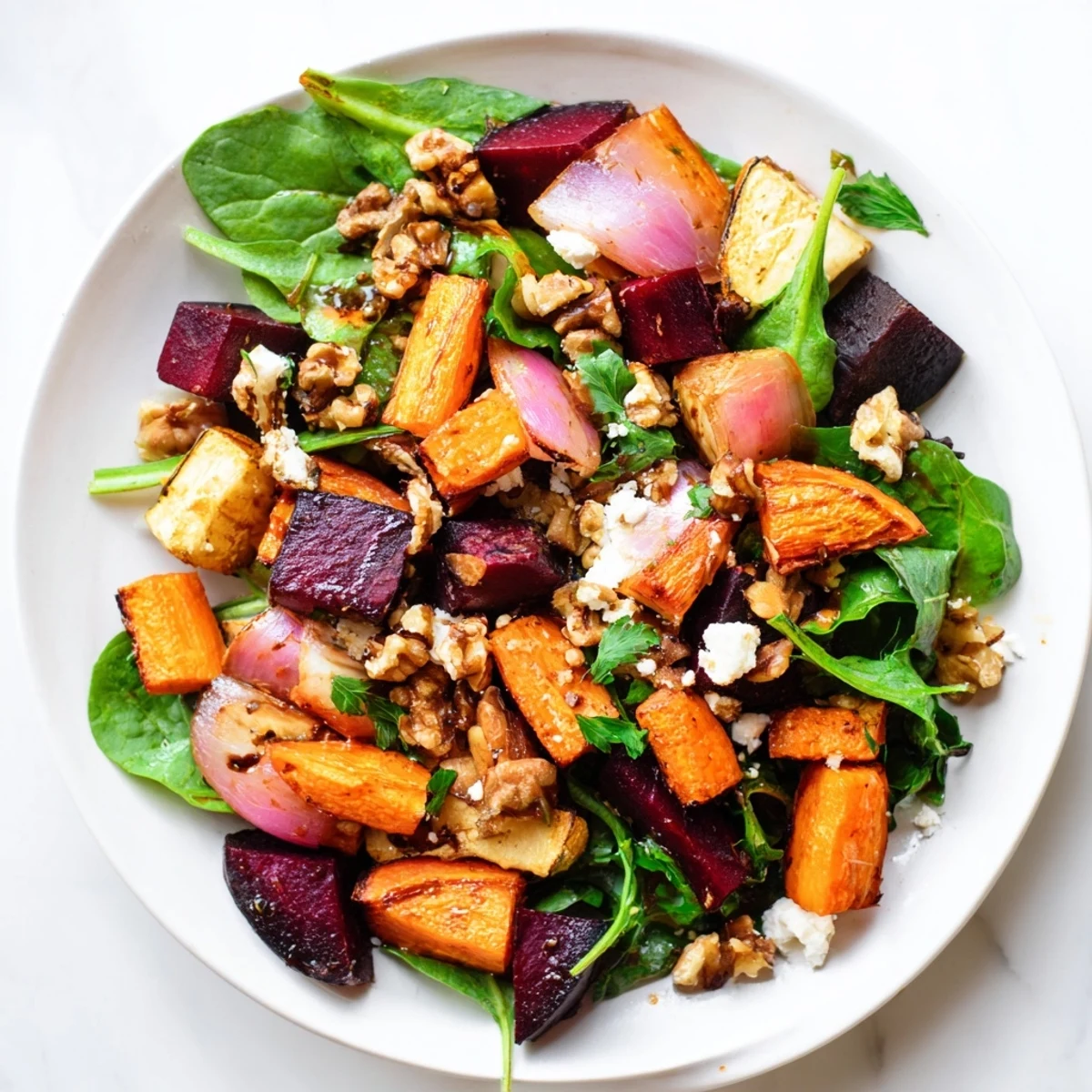
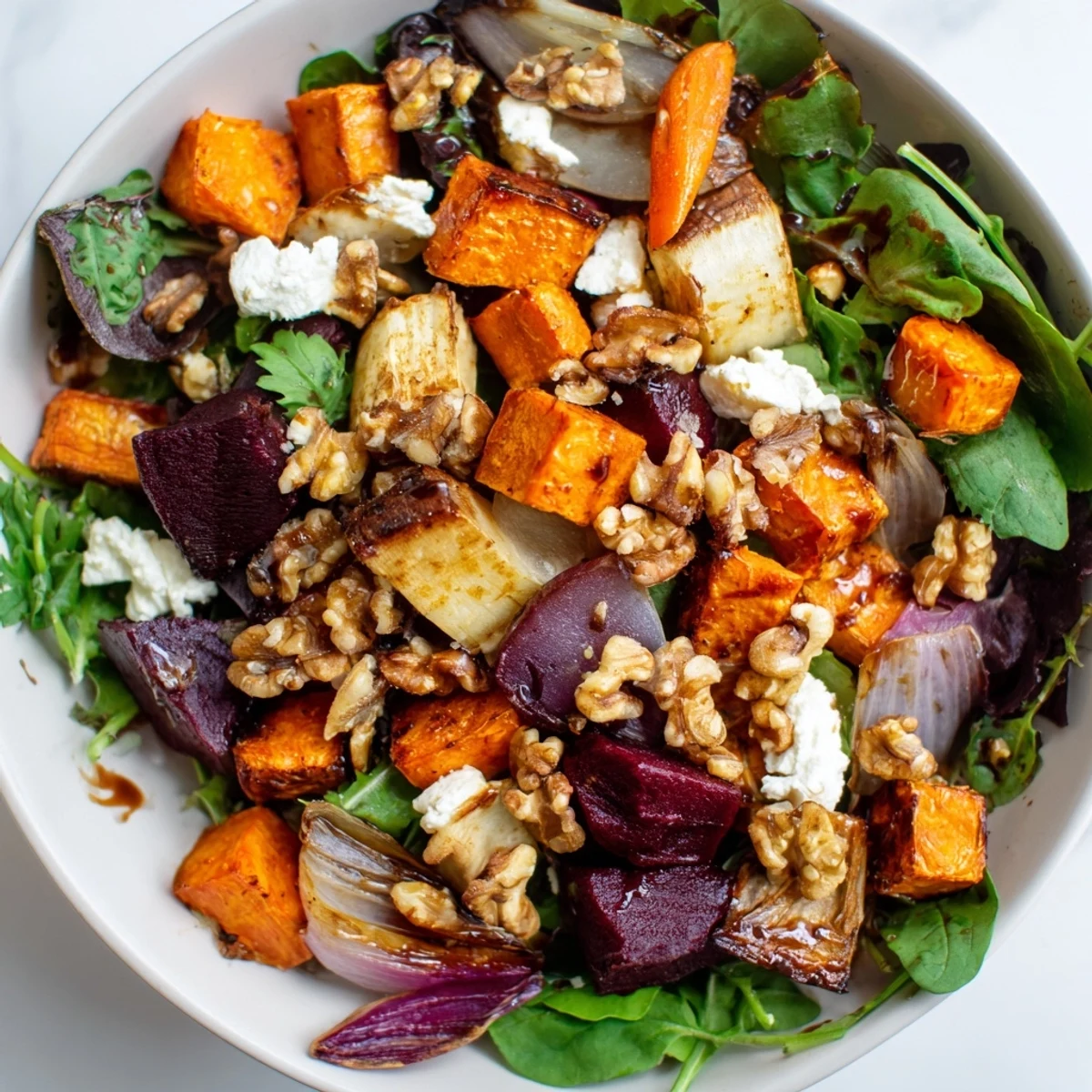
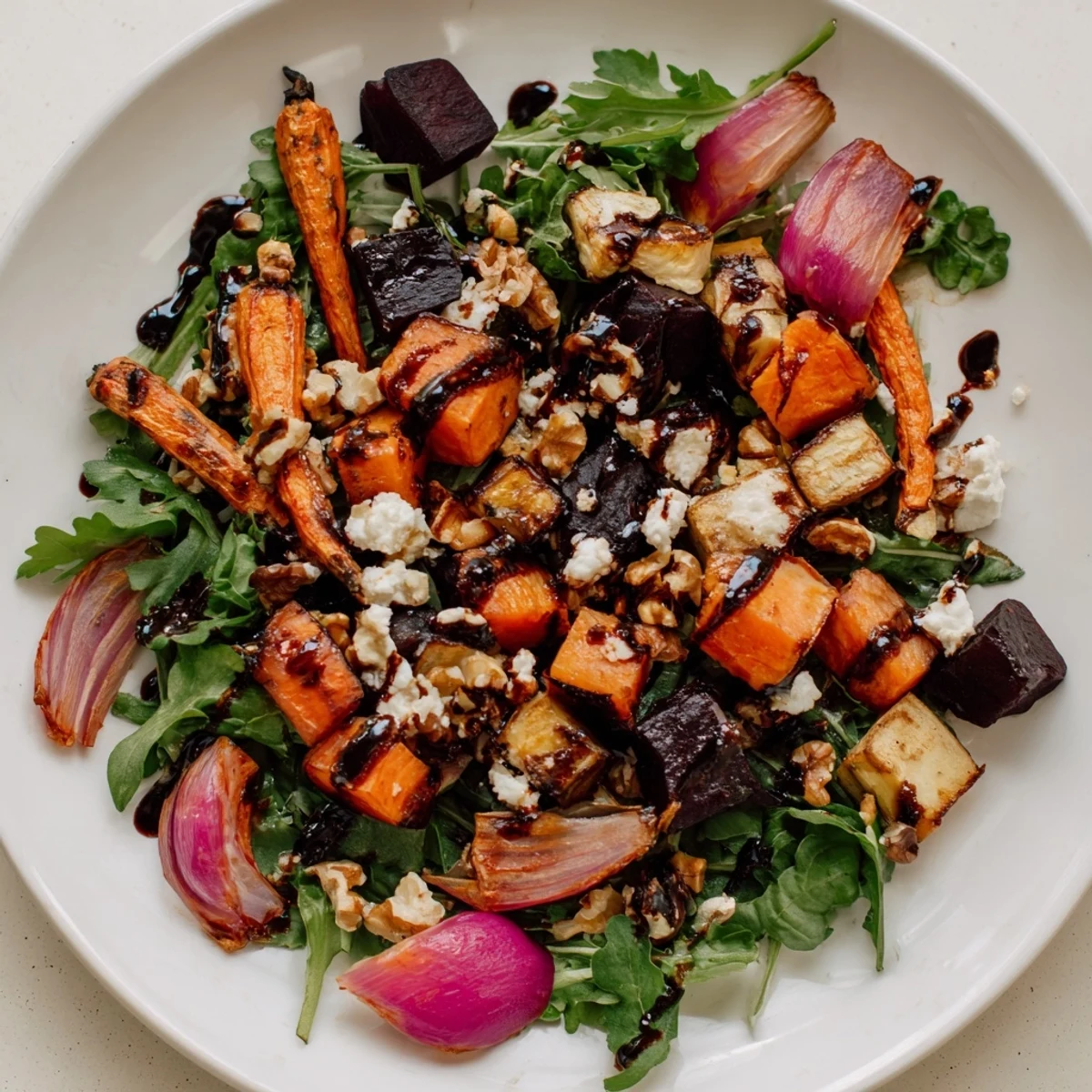
Save This dish highlights a medley of caramelized root vegetables including carrots, parsnips, sweet potato, beet, and red onion, oven-roasted to tender perfection. Combined with a fresh salad base of mixed greens and drizzled with a tangy balsamic vinaigrette, it balances hearty and fresh flavors. Optional toppings like goat cheese, toasted nuts, and parsley add depth and texture. Ideal warm or at room temperature, this vibrant salad suits vegetarian and gluten-free diets while offering seasonal versatility.
There's something almost magical about the moment when raw root vegetables transform in a hot oven—the kitchen fills with this deep, caramelized sweetness that catches you off guard. I discovered this salad on a crisp autumn afternoon when I had a drawer full of farmers market vegetables and no real plan, just curiosity about what roasting them together might do. The colors deepened, the edges crisped, and suddenly what looked like a simple side dish became something I couldn't stop eating. That's when I knew this was worth perfecting.
I remember serving this at a dinner party in November when everyone was tired of heavy food but still wanted something substantial. One guest went back for thirds and asked if I'd started a restaurant in secret—that's the moment I realized this salad had something special going on. It's become my go-to when I want to feel like I've put in effort without the stress, and somehow everyone leaves the table talking about it.
Ingredients
- Carrots: Two medium ones, cut into rough 1-inch pieces so they roast evenly and caramelize on the outside.
- Parsnips: Two of them, peeled and cubed the same size as the carrots—they get creamy inside and taste like sweet butter.
- Sweet potato: One medium one, cubed—this adds a gentle sweetness and beautiful color.
- Beet: One small one, peeled and cubed—it's earthy and won't overpower if you keep it reasonable in size.
- Red onion: Cut into wedges so the layers hold together and caramelize beautifully.
- Olive oil: Three tablespoons to coat everything evenly and help with browning.
- Sea salt and black pepper: 1 teaspoon salt and 1/2 teaspoon pepper—taste as you go because roasting concentrates flavors.
- Dried thyme: 1/2 teaspoon scattered over the vegetables before roasting—it toasts right into them.
- Mixed salad greens: Four cups of whatever looks fresh—arugula, spinach, and baby kale work perfectly together.
- Balsamic vinegar: Two tablespoons for a tangy base that plays well with roasted sweetness.
- Dijon mustard: One teaspoon to add a subtle bite and help emulsify the vinaigrette.
- Honey: One teaspoon for roundness, or use maple syrup if you're keeping it vegan.
- Extra virgin olive oil: 1/4 cup for the vinaigrette—use something you actually like tasting straight.
- Goat cheese or feta: 1/3 cup crumbled, though you can skip this entirely if you prefer or need to.
- Toasted walnuts or pecans: 1/4 cup, roughly chopped—the nuttiness anchors everything.
- Fresh parsley: Two tablespoons chopped—it's green and bright and cuts through the richness.
Instructions
- Heat your oven and prep your stage:
- Set the oven to 425°F and line a large baking sheet with parchment paper—this prevents sticking and makes cleanup almost nothing.
- Toss everything in oil and seasoning:
- Get all your cut vegetables into a large bowl, drizzle with the olive oil, and add salt, pepper, and thyme. Toss with your hands or a spoon until every piece is lightly coated and glistening.
- Spread and roast:
- Pour the vegetables onto your prepared sheet in a single layer—don't crowd them or they'll steam instead of roast. After about 15 minutes, give everything a good stir so the pieces that were on the bottom get their turn on top, then roast for another 15–20 minutes until the edges are golden and a fork slides through easily.
- Make the vinaigrette while they roast:
- In a small bowl, whisk together the balsamic vinegar, mustard, and honey until the honey dissolves, then slowly pour in the olive oil while whisking so it emulsifies slightly. Taste and adjust salt and pepper—it should taste pleasantly sharp and a little sweet.
- Build your salad:
- Arrange your greens on a platter or divide them among plates, then pile the still-warm roasted vegetables right on top. The heat softens the greens slightly and makes everything feel cohesive.
- Dress and top:
- Drizzle the vinaigrette over everything, then scatter the cheese, nuts, and parsley across the top. Serve immediately while the vegetables are still warm, or let it cool to room temperature—both are delicious.
 Save
Save There was a moment last spring when my neighbor came over and I served this cold straight from the fridge the next day, and she asked if I'd started meal prepping professionally. I hadn't—I just appreciated that this salad got better with time, not worse. It felt like a small victory in the kitchen when something this humble turned into something people actually wanted to eat.
Seasonal Swaps That Always Work
The beauty of this salad is that it's a template, not a rulebook. In summer, try cubed zucchini and yellow squash alongside the classics; in winter, turnips and rutabaga add an almost peppery note that's wonderful. Celery root is surprisingly good if you can find it—it gets creamy and mild when roasted. I've learned that sticking to roughly the same total amount of vegetables keeps the ratio balanced, but beyond that, taste what's good at the market and work with that.
Adding Protein If You Want It
This salad is vegetarian as written, but I've discovered a few ways to make it a full meal without changing much. Cooked lentils scattered on top add earthiness and substance, or you could grill some chicken and slice it across the top. Even a soft-boiled egg works beautifully—the warm yolk mixes into the vinaigrette and becomes almost creamy. Pick whatever feels right for what you're cooking.
Wine Pairings and Serving Ideas
A crisp white wine like Sauvignon Blanc cuts through the richness of the roasted vegetables and cheese in the best way. I've also had great luck with a dry rosé on warmer days, or honestly, just cold water if you're not a wine person. This salad is equally at home as a main course for dinner or a side dish at a potluck, and it never looks sparse on the plate.
- Make the roasted vegetables in advance and store them in an airtight container for up to four days—just reheat gently or serve cold.
- If you're doubling the recipe for a crowd, use two baking sheets so the vegetables have room to brown instead of steam.
- The vinaigrette keeps in a jar in the fridge for about a week, so you can make extra and use it on other salads without thinking.
 Save
Save This salad has become my quiet favorite, the one I make when I want to feel capable in the kitchen without fuss. Every time someone asks for the recipe, I'm reminded that sometimes the simplest ideas—just roast good vegetables and dress them well—are the ones that stick around.
Your Questions Answered
- → What root vegetables work best for roasting?
-
Carrots, parsnips, sweet potatoes, beets, and red onions roast well, offering a sweet, caramelized flavor.
- → How do you achieve tender and golden roasted vegetables?
-
Roast at 425°F (220°C), stirring halfway through 30–35 minutes to ensure even cooking and caramelization.
- → Can this salad be made vegan?
-
Yes, omit the goat cheese or feta and swap honey for maple syrup in the vinaigrette.
- → What dressing complements roasted root vegetables?
-
A tangy vinaigrette with balsamic vinegar, Dijon mustard, honey (or maple syrup), olive oil, salt, and pepper enhances the flavors.
- → Are there any suitable protein additions?
-
For added protein, cooked lentils or grilled chicken pair well, though the original is vegetarian and gluten-free.