
 Save
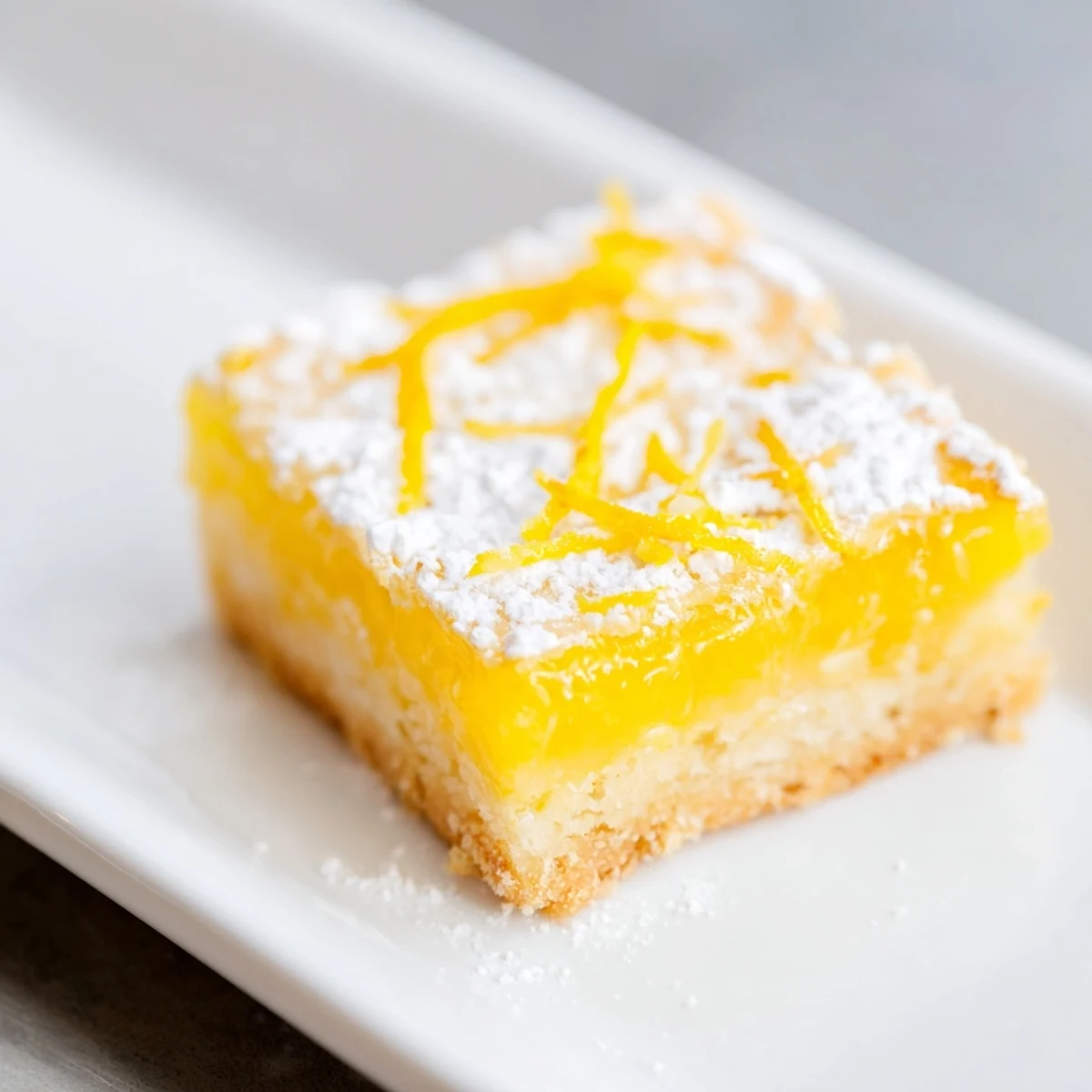
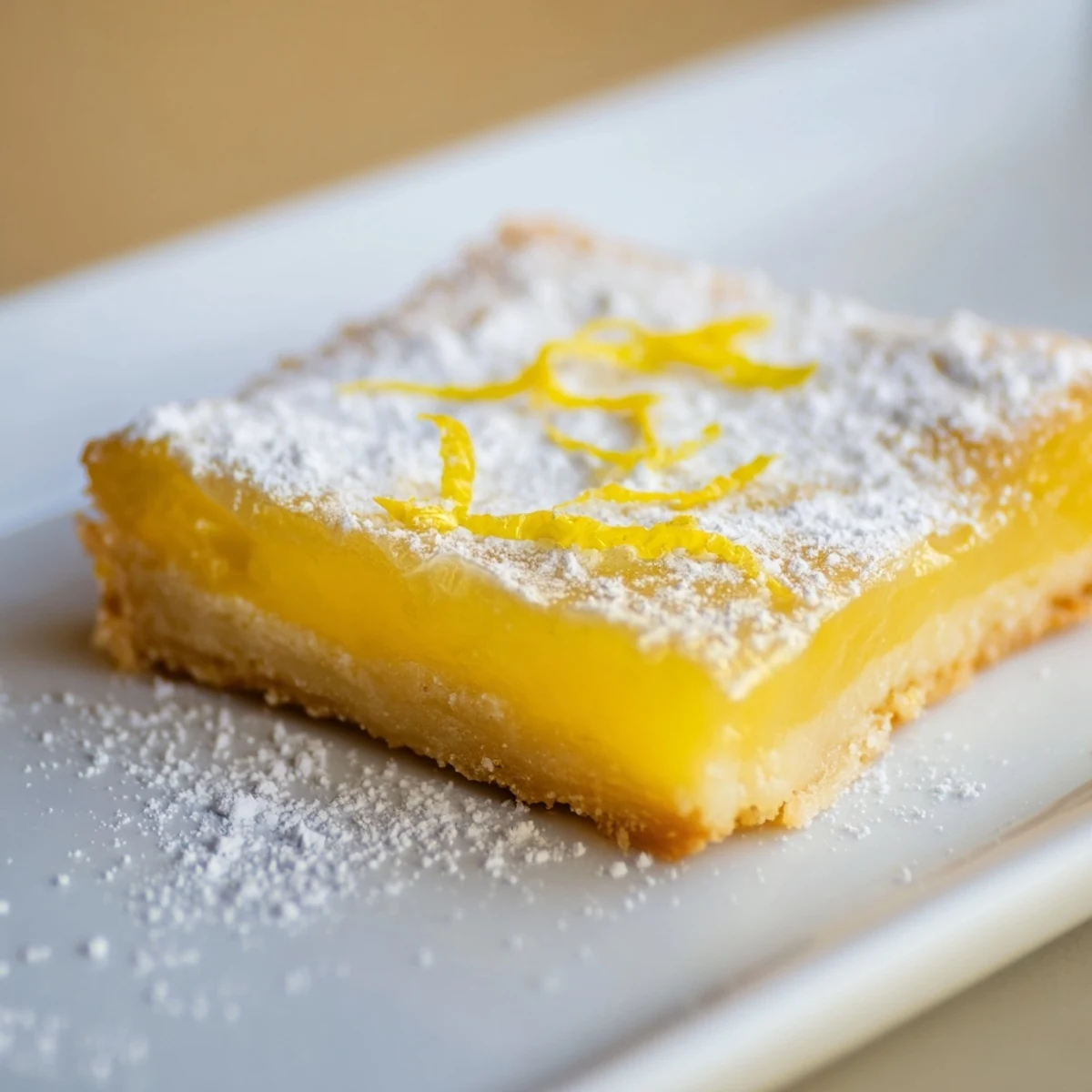
Save This tangy lemon bar features a buttery shortbread crust baked until golden, topped with a smooth lemon curd made from fresh juice and zest. After baking, it is cooled and chilled to set before being dusted with powdered sugar. Perfectly balanced between tart and sweet, these bars offer a refreshing dessert or snack option with a delicate texture and vivid lemon flavor.
Preparation involves creaming softened butter and sugar for the crust, then baking until lightly golden. The filling combines sugar, flour, eggs, lemon juice, and zest whisked together and baked atop the warm crust. Cooling and refrigeration ensure a clean slice, while a dusting of powdered sugar adds a finishing touch.
There's something about the smell of butter and sugar caramelizing that stops me mid-afternoon. Years ago, a neighbor brought over lemon bars—impossibly golden, perfectly tart—and I became obsessed with recreating that exact moment in my own kitchen. What started as a casual weekend bake turned into my go-to dessert, the one people ask for by name. Now I make them whenever I need to remember that the simplest things, done well, are often the most unforgettable.
I made these for a potluck once and watched my usually quiet coworker come back for thirds, then ask for the recipe right there by the dessert table. It was the kind of quiet victory that sticks with you—proof that good food doesn't need to be complicated to matter.
Ingredients
- Unsalted butter (1 cup): Room temperature is non-negotiable here; it creams into that crust and gives you a tender, almost melt-in-your-mouth base that turns golden without burning.
- Granulated sugar for the crust (1/2 cup): This sweetens the crust just enough to complement the tartness coming on top without making it dessert-dessert if that makes sense.
- All-purpose flour (2 cups): Don't sift unless you love a denser crust; I've never bothered and they turn out perfect every time.
- Salt (1/4 tsp): A whisper of salt that makes the butter sing and balances all that brightness from the lemons.
- Granulated sugar for the filling (1 1/2 cups): This is what catches the eggs and keeps the filling creamy instead of rubbery when it bakes.
- All-purpose flour for the filling (1/4 cup): Stabilizes the filling so it sets properly without becoming dense or cakey.
- Large eggs (4): They're the binder that transforms lemon juice into something silky and custard-like; use room temperature if you want them to incorporate smoothly.
- Fresh lemon juice (2/3 cup): Squeeze it yourself—bottled juice tastes flat by comparison, and this is where the soul of the whole thing lives.
- Lemon zest (2 lemons): Those tiny bright flecks add complexity and a peppery lemon quality that juice alone can't deliver.
- Powdered sugar for dusting: The final flourish that makes these look like they came from somewhere fancy.
Instructions
- Prep and crust:
- Heat your oven to 350°F and line your 9x13 pan with parchment paper—those overhanging edges are your secret to lifting these out cleanly later. In a bowl, cream the softened butter and sugar together until it's pale and fluffy, which takes about 2–3 minutes and means the butter has trapped tiny air bubbles that will make the crust tender.
- Build the base:
- Add flour and salt to the butter mixture and stir just until combined—overmixing turns shortbread tough and dense, so stop the moment you don't see dry streaks. Press it evenly into the bottom of your prepared pan and bake for 18–20 minutes until the edges turn a pale golden brown and the whole thing smells like toasted grain.
- Make the filling while waiting:
- Whisk sugar and flour together in a large bowl, then add eggs one at a time while whisking, which helps them incorporate smoothly. Pour in the fresh lemon juice and add the zest, whisking everything together until it's completely smooth and looks almost like a thin custard.
- Layer and bake:
- The moment the crust comes out of the oven, pour the filling right over it while it's hot—this helps everything bond together seamlessly. Return to the oven for 15–18 minutes; you want the top to be barely set with just the slightest jiggle in the very center when you shake the pan gently.
- Cool and chill:
- Let these cool completely in the pan first, which takes about 30 minutes, then slide the whole thing into the fridge for at least an hour. Cold lemon bars are infinitely better than warm ones; the flavors sharpen and the texture firms up into something you can actually slice cleanly.
- Finish and serve:
- Use those parchment edges to lift the whole block out, dust generously with powdered sugar, and slice into 16 squares with a sharp, dry knife. Wipe your knife between cuts if the filling sticks, and serve cold or at room temperature.
 Save
Save These bars have sat on my kitchen counter during late-night conversations, gotten packed into lunchboxes for skeptical kids who came back asking for more, and turned ordinary Tuesdays into something worth remembering. That's the real recipe—butter, sugar, lemons, and the small kindness of making something good for people you care about.
Why Fresh Lemon Matters
I learned this the hard way after making a batch with bottled juice once, thinking it wouldn't matter. It did. Fresh lemons have a brightness and complexity that bottled juice just can't touch, and since lemon juice is literally half the filling, skimping here changes the whole taste. Spend the two minutes squeezing—your future self will thank you.
Storage and Make-Ahead Tips
These keep beautifully in an airtight container in the fridge for up to five days, which makes them perfect for hosting or having a little treasure stashed away for weak moments. You can actually make them up to two days ahead, which is lovely because all the flavors deepen and settle as they sit. If you want to go gluten-free, a one-to-one gluten-free flour blend swaps in seamlessly for the regular flour in both the crust and filling.
Playing with Flavor
The base recipe is perfectly balanced, but there's room for interpretation if you want to play around. A pinch of vanilla extract in the filling adds subtle warmth, while extra lemon zest pushes the tartness even further if you're after that puckering brightness. Some people add a touch of coconut oil to the crust, which gives it a slightly different texture—still shortbread, just with more tenderness. You could dust with regular sugar mixed with a tiny bit of lemon zest instead of powdered sugar for a different finish.
- For extra tang, use zest from three lemons instead of two and let the filling go slightly more golden in the oven.
- A half-teaspoon of vanilla in the filling adds depth without being noticeable as vanilla.
- Let them come to cool room temperature for serving if you like a slightly softer, almost fudgy texture.
 Save
Save There's a reason people come back to these bars again and again—they're simple enough to make on a whim, but elegant enough to matter. Make a batch this week.
Your Questions Answered
- → How do I achieve a buttery crust?
-
Use softened unsalted butter and sugar, creamed together until light and fluffy before adding flour and salt. This ensures a tender, rich crust.
- → Can I use fresh lemons for the filling?
-
Yes, freshly squeezed lemon juice and zest enhance the bright, tangy flavor of the filling significantly.
- → How long should the bars chill before serving?
-
Chilling for at least one hour is recommended to allow the filling to set for clean slicing.
- → What baking pan size is best?
-
A 9x13-inch baking pan provides the ideal thickness and even baking for the bars.
- → Is there a way to make these bars gluten-free?
-
Substitute the all-purpose flour in the crust with an equal amount of gluten-free flour blend for a gluten-free version.