
 Save
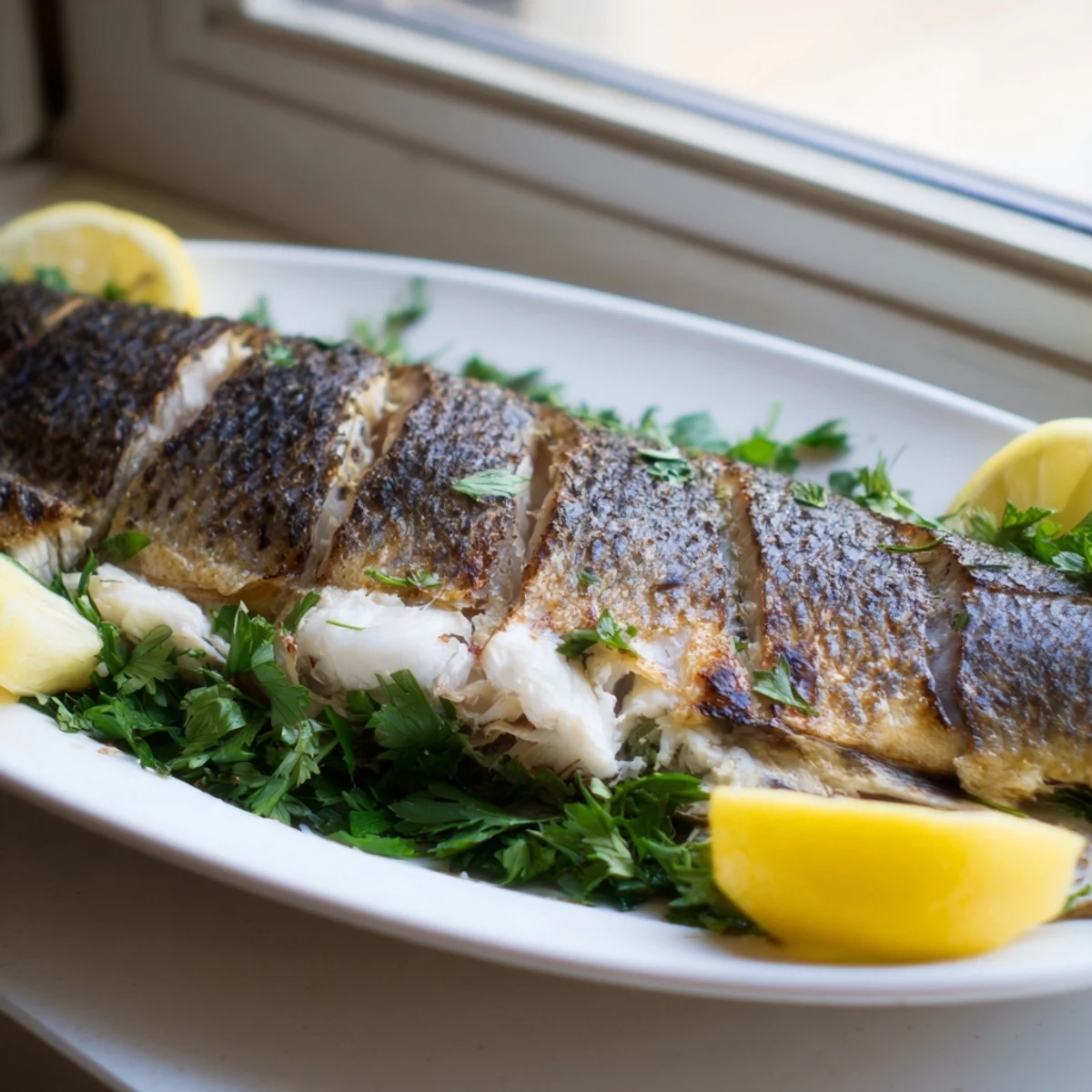
Save This impressive whole roasted fish delivers restaurant-quality results at home. The key is thoroughly drying the skin before roasting at high heat, which creates that satisfying crackle. Aromatic stuffing of lemon slices, fresh thyme, rosemary, and garlic infuses the delicate flesh with bright Mediterranean flavors.
The preparation is straightforward: score the skin, season generously, stuff with aromatics, and roast at 220°C for 20-25 minutes. Let the fish rest briefly before serving to allow juices to redistribute.
Perfect for entertaining, this dish pairs beautifully with roasted vegetables or a fresh green salad. The presentation is stunning, and the combination of crisp skin and tender, herb-scented flesh makes for an unforgettable dining experience.
The first time I brought a whole fish home from the market, my roommate looked at me like I'd adopted a pet. But that evening, as the skin crackled in the oven and garlic filled our tiny apartment, something magical happened. We stood around the baking sheet, picking at the fish with our forks, completely abandoning any pretense of a proper dinner. Now it's my go-to when I want to make dinner feel like an occasion without actually working that hard.
Last summer, I made this for a dinner party on my balcony, and honestly, the conversation stopped when I carried the platter outside. The fish was golden and bronzed, the herbs were fragrant, and something about serving a whole fish just makes people lean in. My friend Maria, who claims she hates cooking, asked for the recipe before she'd even taken her first bite.
Ingredients
- 1 whole fish: Sea bass, snapper, or branzino work beautifully, and ask your fishmonger to clean and scale it for you
- 2 tbsp olive oil: This helps the seasoning stick and promotes even browning, but don't overdo it or the skin won't crisp
- 1 ½ tsp coarse sea salt: Whole fish can handle aggressive seasoning, so be generous here
- ½ tsp freshly ground black pepper: Freshly cracked makes a noticeable difference in depth of flavor
- 1 lemon, sliced: These go inside the cavity to infuse the fish from within as it roasts
- 4 sprigs fresh thyme and 2 sprigs rosemary: Woody herbs stand up to high heat better than delicate ones like basil
- 2 cloves garlic, sliced: Thin slices release their flavor more gradually than minced garlic
- 1 tbsp chopped fresh parsley: This adds a fresh, bright finish and a pop of color against the golden skin
- 1 lemon, cut into wedges: Serve alongside for squeezing over the cooked fish right at the table
Instructions
- Get your oven ready:
- Preheat to 220°C (425°F) and line a large baking sheet with parchment paper or foil for easy cleanup later
- Prep the fish properly:
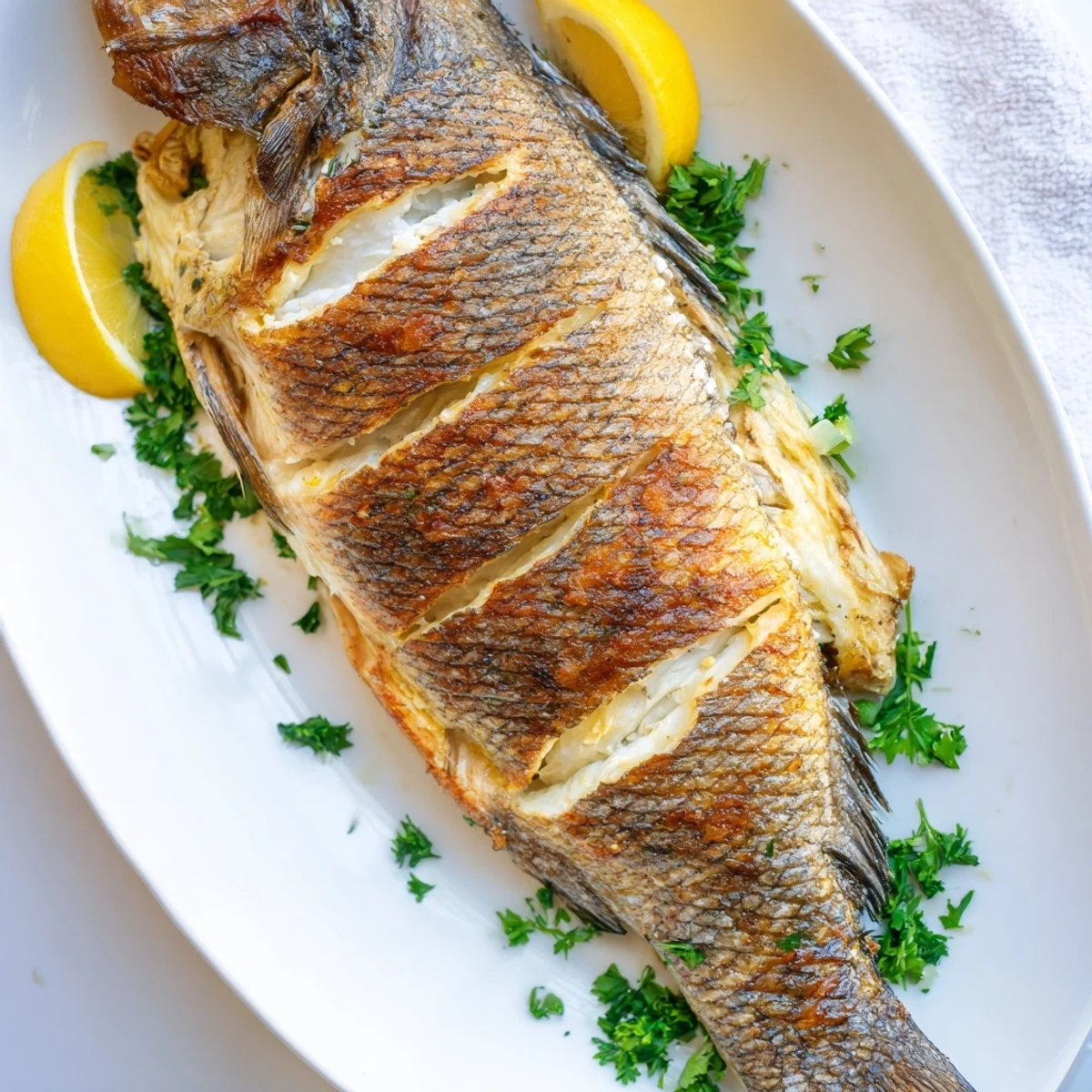
- Pat the fish completely dry inside and out with paper towels, then score the skin diagonally 3 to 4 times on each side, cutting just through to the flesh
- Season it generously:
- Rub olive oil all over the fish, including inside the cavity, then sprinkle with sea salt and black pepper, getting into all the nooks and crannies
- Stuff the cavity:
- Fill the inside with lemon slices, thyme sprigs, rosemary, and the sliced garlic, tucking everything in snugly
- Position for perfect skin:
- Lay the fish on your prepared baking sheet, making sure the skin is exposed and not touching too much oil or pooled juices
- Roast until golden:
- Cook in the center of the oven for 20 to 25 minutes, until the skin is crispy and bronzed and the flesh flakes easily when tested with a fork
- Rest and serve:
- Let the fish rest for 2 to 3 minutes before transferring to a serving platter, then sprinkle with fresh parsley and arrange lemon wedges around the edges
 Save
Save My grandmother always said that cooking a whole fish was an act of generosity, something about feeding people from a single creature feeling more honest somehow. I didn't really get it until I watched my friends gather around this fish last spring, laughing and reaching across the table, completely abandoning their plates. Food becomes something else when you share it like that.
Choosing the Right Fish
I've learned that not all whole fish are created equal when it comes to roasting. Look for fish with firm, white flesh and naturally oily skin, like sea bass or branzino. Avoid very delicate fish like sole or flounder, which can fall apart during cooking. Your fishmonger can steer you toward what's freshest and most suitable for high heat roasting.
Getting That Restaurant Quality Skin
The difference between good crispy skin and great crispy skin comes down to moisture control. After patting the fish dry, let it sit uncovered in the fridge for 30 minutes before cooking. This air drying step might seem fussy, but it transforms the skin texture. Also, resist the urge to move the fish around once it's in the oven, letting it develop that gorgeous, blistered crust undisturbed.
Serving and Presentation
There's something dramatically beautiful about a whole roasted fish landing on the table, still sizzling slightly. I like to serve it family style with simple roasted vegetables and a green salad. Let people help themselves, pulling away from the backbone and discovering the tender meat beneath that crackling skin.
- Provide small bowls for bones, as some diners might be apprehensive about navigating whole fish
- A pair of kitchen shears makes it easier to snip through fins before serving
- The collar meat right behind the head is considered a delicacy, make sure someone claims it
 Save
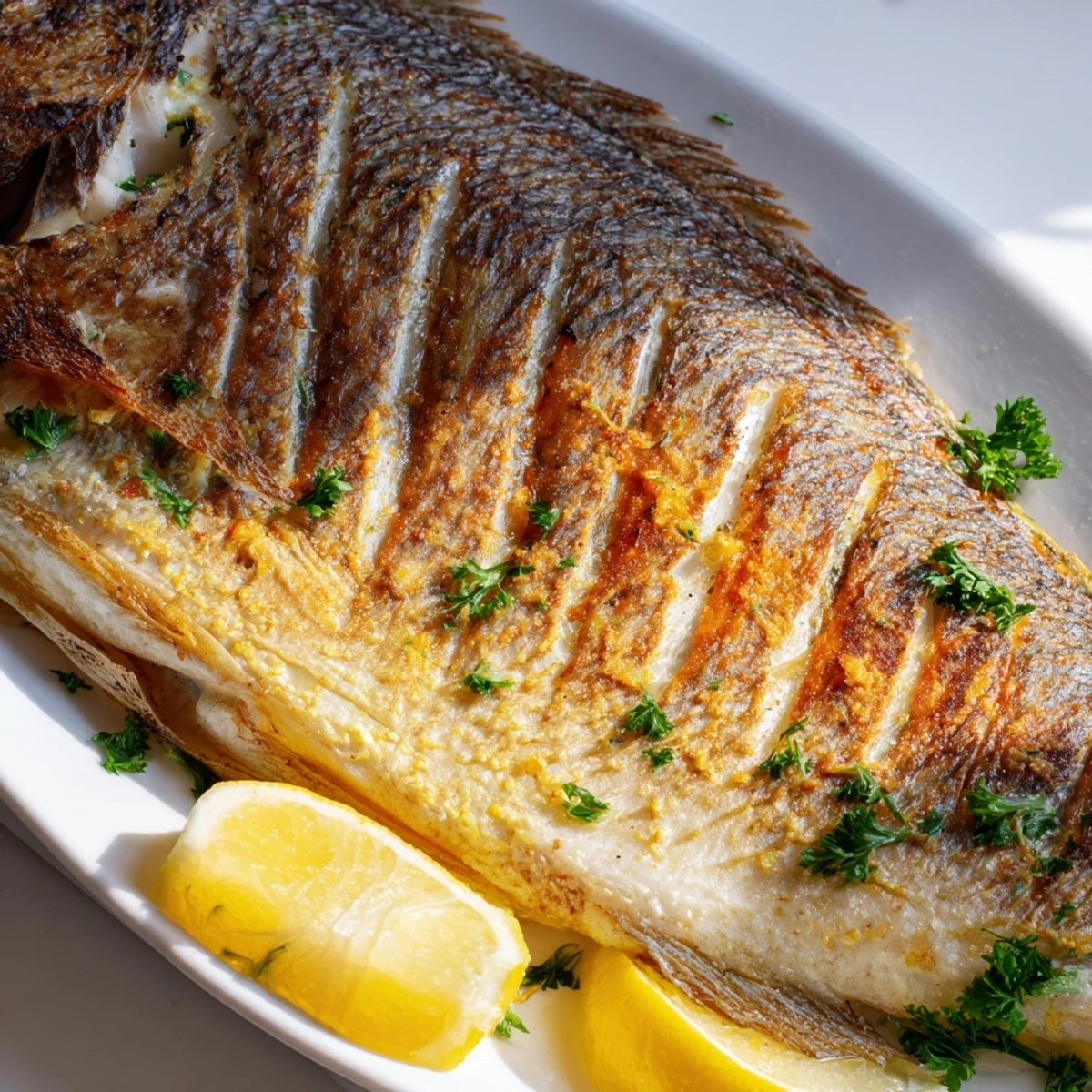
Save There's a quiet confidence that comes with serving a whole fish, like you know something about cooking that most people have forgotten. Watching someone crack through that skin for the first time and seeing their eyes light up, that's the moment that makes it all worth it.
Your Questions Answered
- → What type of fish works best for roasting whole?
-
Sea bass, snapper, and branzino are excellent choices due to their firm flesh and mild flavor. Look for a fish weighing around 1.2 kg that's been cleaned and scaled. The head and tail should remain intact for even cooking and impressive presentation.
- → How do I get the skin really crispy?
-
The secret is thorough drying. Pat the fish completely dry inside and out with paper towels before seasoning. Score the skin diagonally to help fat render out, and avoid covering it with oil or juices during roasting. High heat (220°C) is essential for achieving that perfect crunch.
- → How can I tell when the fish is done?
-
The skin should be golden and crisp. Insert a fork near the backbone—the flesh should flake easily and appear opaque rather than translucent. The internal temperature should reach 63°C. If in doubt, slightly undercooked is preferable to overcooked, as residual heat completes cooking.
- → Can I prepare this in advance?
-
You can clean, dry, and season the fish up to 2 hours before cooking. Keep it refrigerated until ready to roast. For the crispiest skin, avoid stuffing the cavity too far in advance, as the moisture from lemon and herbs can soften the skin. Garnish with parsley just before serving.
- → What sides complement this dish?
-
Roasted Mediterranean vegetables like zucchini, bell peppers, and eggplant work wonderfully. A fresh green salad with vinaigrette balances the richness. For something more substantial, serve with roasted potatoes, crusty bread to soak up juices, or lemon-infused rice pilaf.
- → What wine pairs well with whole roasted fish?
-
Crisp white wines like Sauvignon Blanc or Vermentino complement the bright citrus and herb notes. A dry Pinot Grigio or Assyrtiko also pairs beautifully. Serve chilled to contrast with the warm, aromatic fish.