
 Save
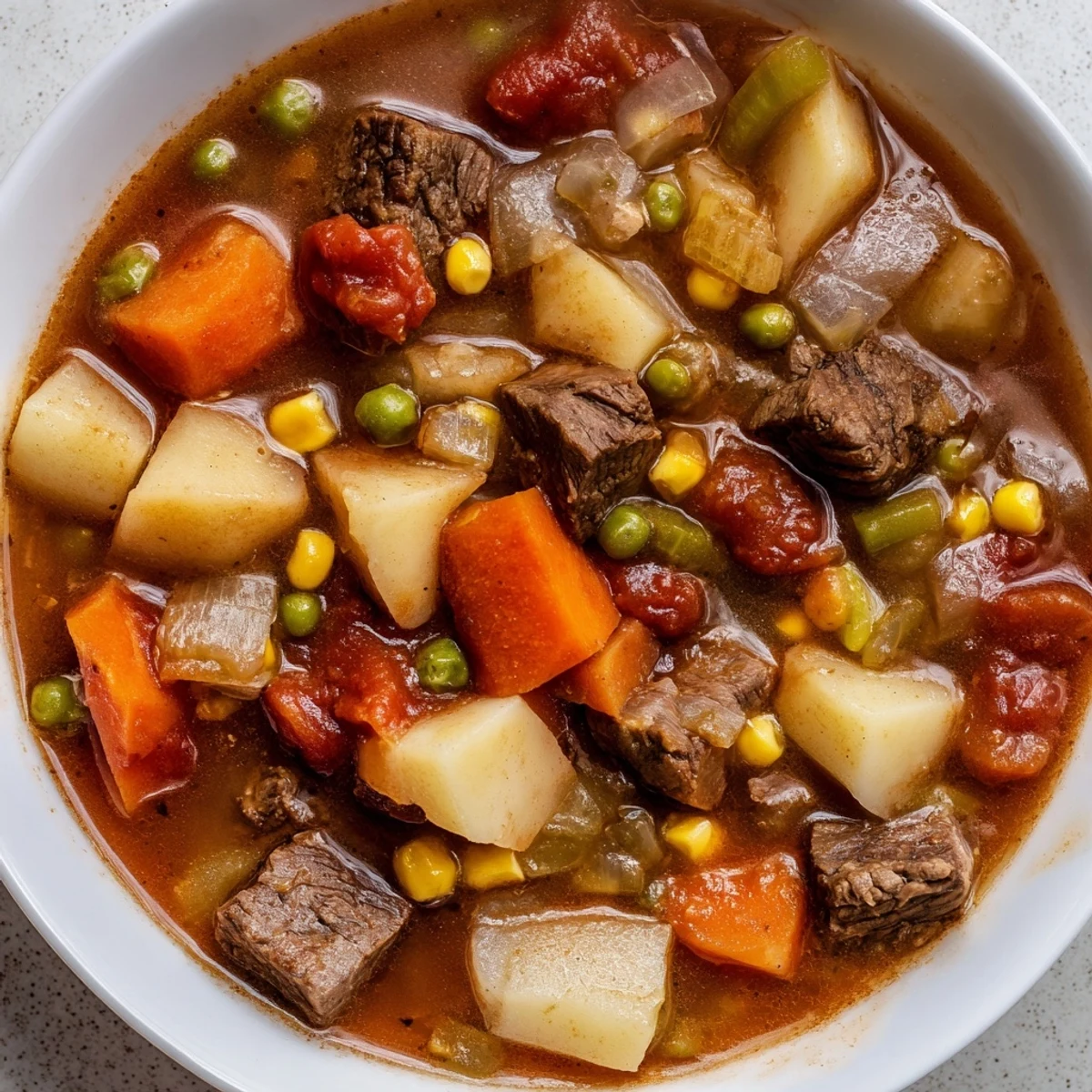
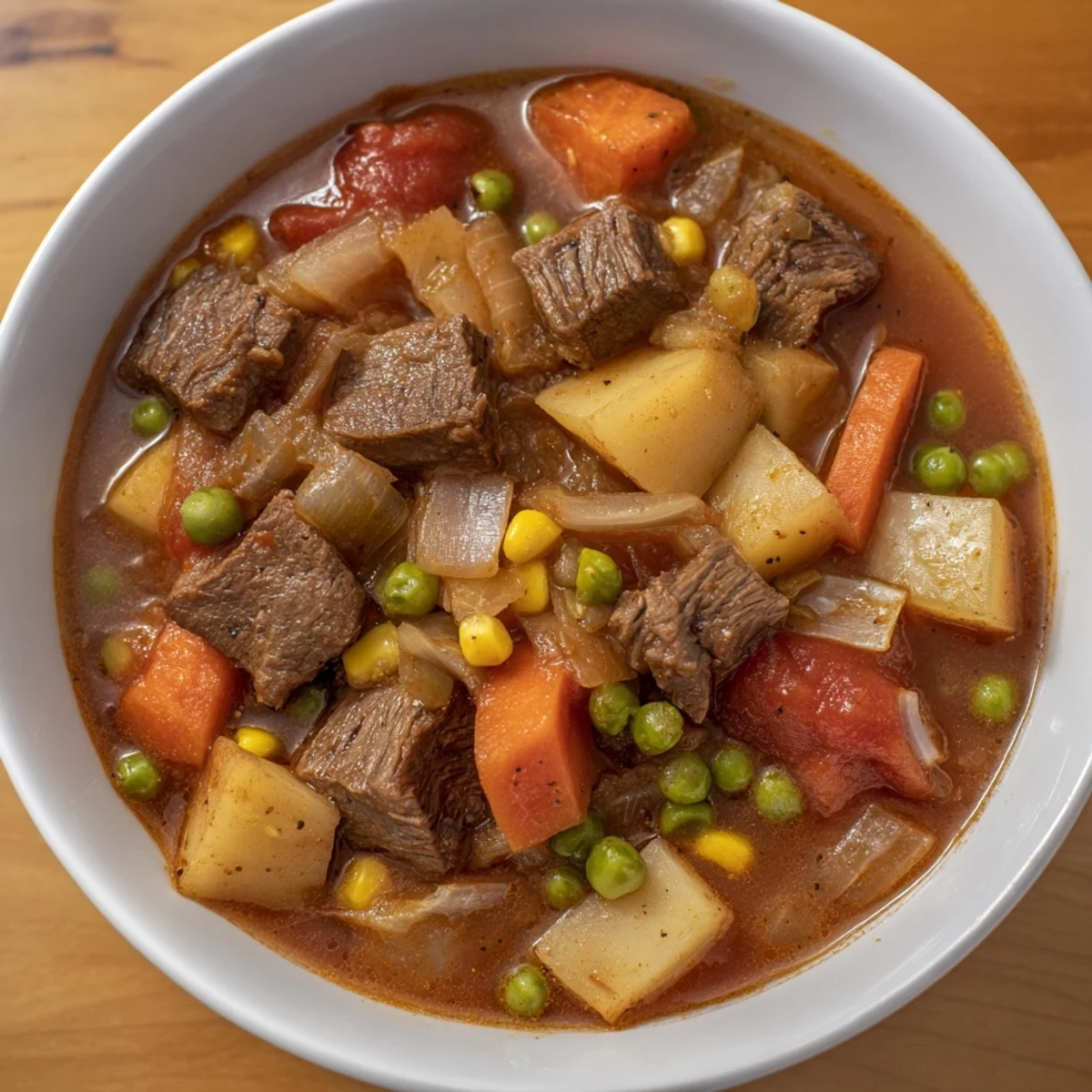
Save This hearty bowl features tender cubes of beef simmered with diced potatoes, carrots, celery, and onion, enriched by peas and corn. Slow cooking in a flavorful broth infused with tomato, thyme, and oregano creates a comforting balance of textures and tastes. Ideal for colder days, this nourishing dish can be thickened by mashing potatoes and pairs beautifully with crusty bread or rice for a fulfilling experience.
There's something about a pot of beef and vegetable soup simmering on the stove that makes a house feel like home. I learned this recipe during a particularly cold February when my neighbor brought over a thermos of something similar, and I spent the whole evening wondering what made it taste so deeply comforting. The answer turned out to be simple: good beef, time, and vegetables that have surrendered completely to the broth. Now it's the soup I make when someone needs feeding or when I need to feed myself.
I made this for my sister when she moved into her apartment with nothing but a pot and determination. Watching her taste it and immediately ask for the recipe felt like I'd given her something more valuable than the bowl itself. That's when I knew this soup belonged in the regular rotation of things worth sharing.
Ingredients
- Beef stew meat: Use chunks that are roughly the same size so they cook evenly; larger pieces stay tender longer in the broth.
- Potatoes: Medium dice means they break down enough to thicken the soup naturally without dissolving entirely.
- Carrots and celery: These form the aromatic base and develop an almost sweet quality after long cooking in beef broth.
- Onion and garlic: Diced onion melts into the broth, while minced garlic distributed throughout gives you small bursts of flavor.
- Frozen peas and corn: They go in at the very end so they keep their color and don't turn into sad little spheres.
- Diced tomatoes: The acidity brightens everything and creates depth you can't achieve with broth alone.
- Beef broth: Use the best quality you can find or make your own; it's the foundation of everything.
- Tomato paste: A tablespoon or two concentrates the tomato flavor and adds body to the broth.
- Thyme and oregano: Dried herbs are actually preferred here because they distribute evenly and won't overpower like fresh herbs sometimes do.
- Olive oil: Just enough to get the beef to brown properly without making the soup greasy.
Instructions
- Brown the beef first:
- Heat oil until it shimmers, then add beef in a single layer and don't move it around too much; you want a golden crust that tastes like caramelization.
- Build the flavor base:
- Once the beef is browned, add your onion, garlic, carrots, and celery to the same pot so they pick up all those flavorful brown bits stuck to the bottom.
- Wake up the tomato paste:
- Cook it for a minute or so in the hot pot before adding liquid; this changes it from raw to rich and integrated.
- Combine everything:
- Add broth, tomatoes, potatoes, and your seasonings, then bring it to a boil so you know it's heating properly before you lower the heat.
- Simmer low and slow:
- An hour of gentle bubbling is where the magic happens; the beef becomes fork-tender and the potatoes thicken the broth naturally.
- Finish with the bright vegetables:
- Peas and corn go in during the last ten minutes so they stay vibrant and don't lose themselves to the broth.
- Season to your taste:
- Taste before serving and adjust salt and pepper; you'd be surprised how much difference a small pinch makes.
 Save
Save The first time someone asked for seconds without hesitation, I realized this soup had crossed over from practical to meaningful. It's the kind of dish that makes people linger at the table longer than they planned.
Thickness and Texture
If you like your soup brothier, leave it as is and enjoy the way everything floats gracefully. If you prefer something that clings to the spoon more substantially, use a fork or potato masher to crush some of the cooked potatoes right in the pot about ten minutes before serving. I usually do this halfway—enough so the soup has body but still feels like soup and not stew.
Variations Worth Trying
This recipe is a canvas that respects your preferences and your pantry. I've swapped regular potatoes for sweet potatoes and got something earthier and slightly sweeter that works beautifully with the beef. A parsnip or two adds a subtle nuttiness that people notice but can't quite name. Some nights I add a splash of red wine to the broth, which deepens everything without making it taste like wine.
Serving and Storage
Serve this soup in bowls with warm crusty bread for tearing, or over rice if you want something more substantial. It reheats gently in a pot on the stovetop and actually tastes better the next day when the flavors have had time to know each other better. This soup also freezes beautifully; I often make a double batch and freeze half for nights when cooking feels like too much.
- Crusty bread is non-negotiable for soaking up the broth and making it a complete meal.
- Leftovers taste even better after a day in the refrigerator when flavors have had time to meld.
- Frozen portions thaw and reheat better if you leave some broth unfrozen when cooling.
 Save
Save This is the soup that quietly became one of my most-made dishes, the one people request without shame. It's honest food that asks very little but gives back warmth and satisfaction in equal measure.
Your Questions Answered
- → Can I use other vegetables instead of peas and corn?
-
Yes, vegetables like green beans, zucchini, or bell peppers can be added for variety without altering the hearty nature of the dish.
- → How can I thicken the broth if desired?
-
Mashing some of the cooked potatoes within the soup helps to naturally thicken the broth without added thickeners.
- → What cut of beef works best for this slow simmered dish?
-
Tougher cuts like stew meat or chuck, cut into cubes, are ideal as they become tender and flavorful when cooked slowly.
- → Is it possible to prepare this dish ahead of time?
-
Yes, flavors deepen when refrigerated overnight; just reheat gently before serving and add frozen vegetables towards the end.
- → What herbs complement the flavors in this dish?
-
Dried thyme, oregano, and bay leaves infuse the broth with aromatic notes, enhancing the overall taste.