
 Save
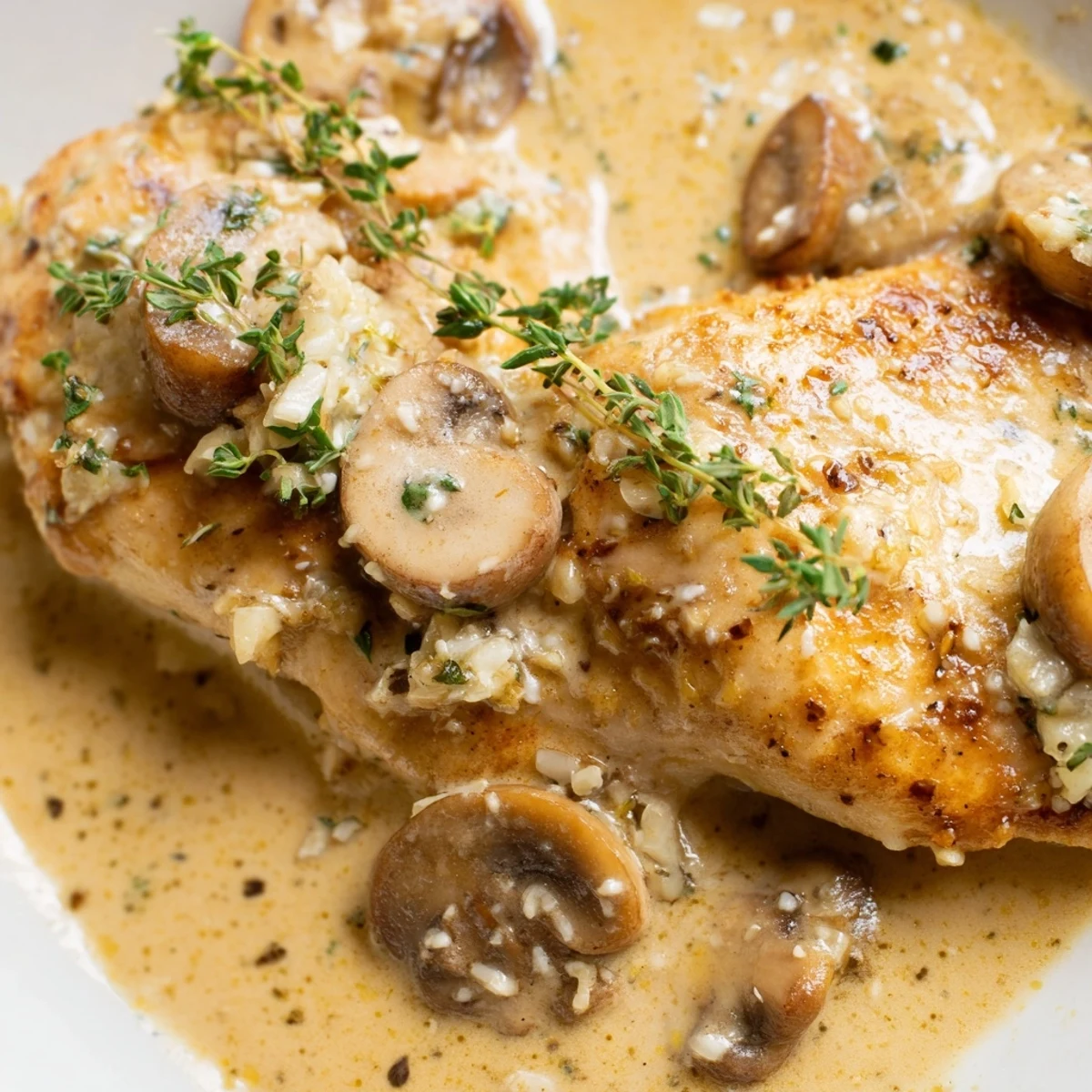
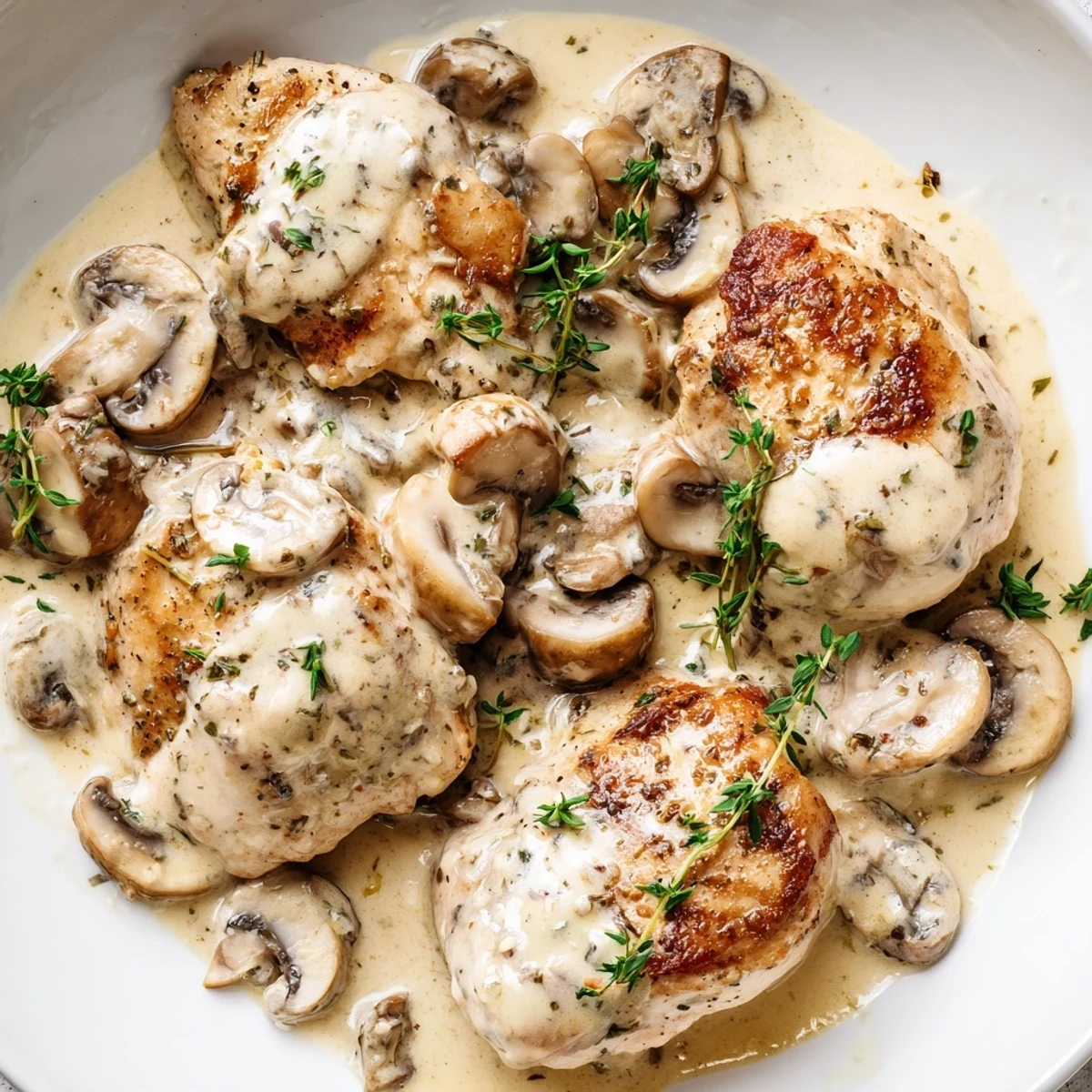
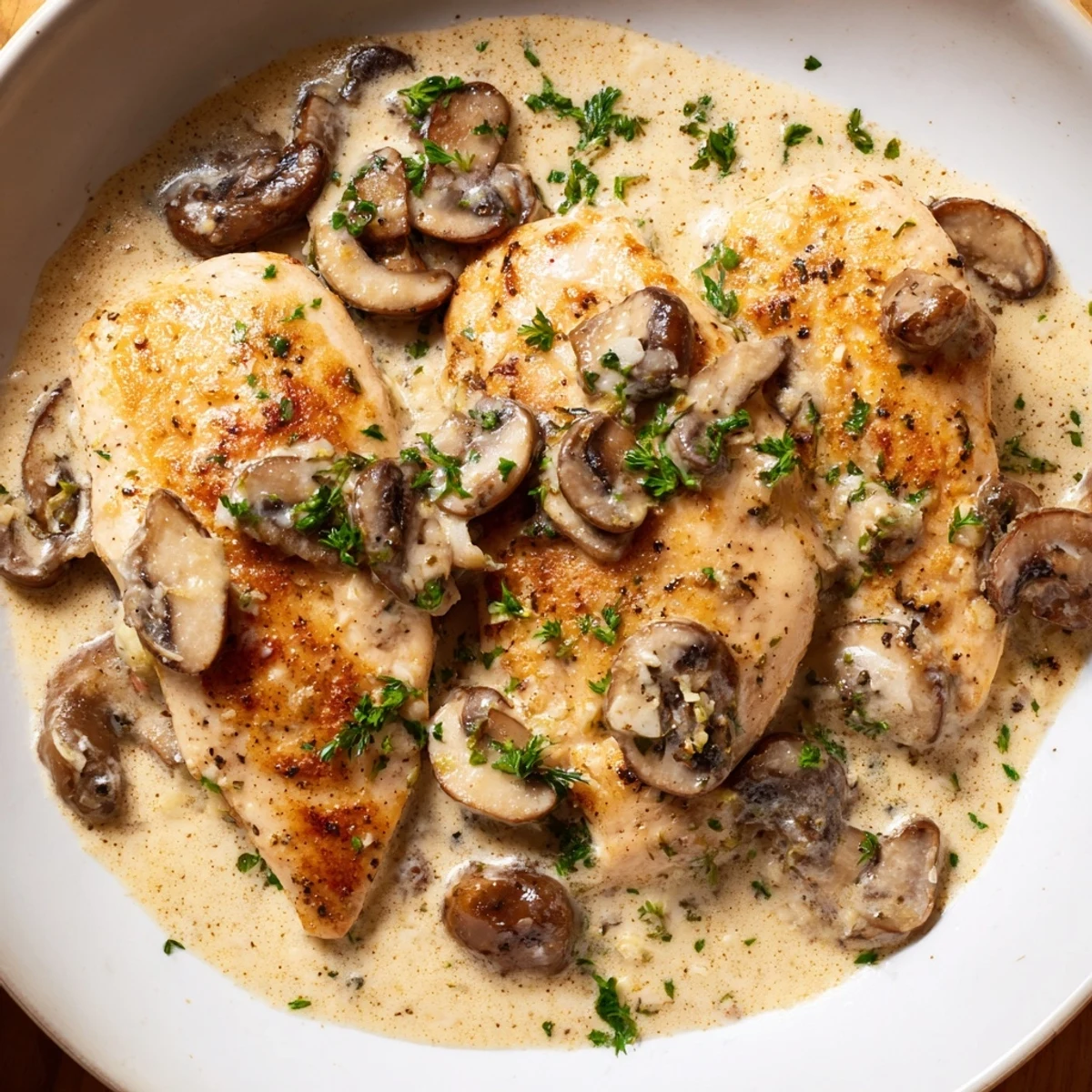
Save This dish features tender chicken breasts cooked to golden perfection, paired with sautéed mushrooms and onions in a skillet. A velvety garlic cream sauce—infused with Dijon mustard, fresh thyme, and Parmesan—brings rich flavor and comforting warmth. Perfectly balanced seasoning enhances the succulent chicken while fresh parsley adds a finishing touch. Ideal served alongside mashed potatoes, rice, or crusty bread that soaks up the luscious sauce. Quick to prepare and coaxing satisfying tastes, this skillet meal suits any night of the week.
There's something about a skillet dinner that makes a weeknight feel less like an obligation and more like a small luxury. One Tuesday, I stood at my stove with a handful of mushrooms and some chicken breasts, thinking I'd throw together something simple—but the moment that creamy sauce came together, pooling around golden chicken, I understood why this became the dish I reach for when I want to feel like I'm taking care of myself without a lot of fuss.
I made this for my sister on a cold evening when she needed comfort food without the production—she brought the wine, I brought the skillet, and we ended up sitting at the kitchen counter talking for an hour after dinner was finished, which says everything about how satisfying this dish is.
Ingredients
- Boneless, skinless chicken breasts (4 pieces, about 150 g each): Pat them dry before seasoning so they brown properly and stay juicy inside—this small step makes a real difference in texture.
- Salt and black pepper: Season generously at the start; you'll adjust again at the end, but don't be timid with that first coating.
- All-purpose flour or gluten-free alternative (2 tbsp): A light dusting helps the chicken develop a golden crust and thickens the sauce slightly as it cooks.
- Olive oil (2 tbsp): Use a good quality oil you actually like the taste of—it matters when it's this prominent.
- Cremini or white mushrooms (250 g, about 9 oz), sliced: Slice them thickly enough that they keep their shape but thin enough to cook through; cremini mushrooms have more flavor than whites if you have a choice.
- Yellow onion (1 small, finely chopped): The onion dissolves into the sauce and adds sweetness that balances the richness beautifully.
- Garlic (3 cloves, minced): Mince it fresh just before adding so it releases its aroma into the pan—that's when you know the sauce is about to happen.
- Chicken broth (120 ml or ½ cup): Use good quality broth; it's a main flavor player here, not just liquid filler.
- Heavy cream (240 ml or 1 cup): Don't substitute with milk or cream alternatives if you can help it—the fat is what makes the sauce silk and luxurious.
- Dijon mustard (1 tsp): A quiet ingredient that adds complexity and keeps the sauce from tasting too one-note.
- Fresh thyme leaves or dried thyme (1 tsp fresh or ½ tsp dried): Thyme feels herbaceous and elegant without overpowering anything else in the pan.
- Freshly grated Parmesan cheese (2 tbsp): Grate it yourself if you can; pre-grated cheese doesn't melt as smoothly or taste as bright.
- Fresh parsley (2 tbsp, chopped): The final garnish adds color and a fresh note that cuts through the richness.
Instructions
- Prepare your chicken:
- Pat the chicken breasts completely dry with paper towels—moisture is the enemy of browning. Season both sides generously with salt and pepper, then dust lightly with flour, shaking off any excess.
- Sear the chicken:
- Heat olive oil in a large skillet over medium-high heat until it shimmers. Once the oil is hot, place the chicken breasts in the pan and let them sit undisturbed for 4–5 minutes until they develop a golden crust, then flip and cook the other side for another 4–5 minutes until cooked through.
- Rest and clear the pan:
- Transfer the cooked chicken to a clean plate and cover it loosely with foil so it stays warm while you build the sauce.
- Sauté the vegetables:
- In the same skillet with all those browned bits still clinging to the bottom, add the sliced mushrooms and chopped onion. Let them cook for 5–7 minutes, stirring occasionally, until the mushrooms release their moisture and begin to turn golden. The onion should start to look translucent.
- Wake up the pan with garlic:
- Add the minced garlic and cook for about 1 minute, stirring constantly, until the smell hits you—that's when you know it's ready.
- Deglaze and simmer:
- Pour in the chicken broth, scraping the bottom of the pan with a wooden spoon to release all those flavorful browned bits. Let it bubble gently for about 2 minutes so the flavors marry.
- Build the sauce:
- Lower the heat to medium-low and pour in the heavy cream, stirring as you go. Add the Dijon mustard and thyme, and let everything simmer gently for 3–4 minutes until the sauce thickens slightly and coats the back of a spoon.
- Finish with cheese:
- Stir in the grated Parmesan until it melts completely and disappears into the sauce, creating that silky finish.
- Reunite and warm through:
- Return the chicken and any accumulated juices to the skillet. Spoon the sauce over the chicken and let it all simmer together for 2–3 minutes so the chicken absorbs some of that creaminess.
- Taste and adjust:
- Take a spoonful of sauce, taste it, and decide if it needs more salt or pepper. Season to your preference.
- Serve:
- Transfer to a plate or serving dish and scatter the fresh parsley over the top just before bringing it to the table.
 Save
Save What I love most about this dish is that it feels like you fussed over it, even though you didn't really fuss at all—there's something deeply satisfying about that sleight of hand in cooking.
What to Serve It With
This dish practically demands something to soak up the sauce, so crusty bread is the obvious choice—but mashed potatoes add a different kind of comfort, and rice works beautifully if you want something lighter. I've also served it over egg noodles on nights when I wanted the sauce to cling to every bite, and honestly, it's all correct.
How to Make It Your Own
The structure here is solid, but the beauty of a skillet dinner is how forgiving it is. A splash of white wine when you deglaze the pan adds acidity that makes the sauce taste brighter, or you can add a teaspoon of whole grain mustard instead of Dijon for more texture. If you're partial to dark meat, boneless thighs cook the same way and stay juicier—I've done this both ways and never regretted either choice.
Storage and Reheating
This keeps beautifully in the refrigerator for up to four days, and it actually tastes better the next day once the flavors have settled into each other. Reheat it gently over medium-low heat on the stovetop, stirring occasionally and adding a splash of broth if the sauce looks too thick. The microwave works in a pinch, but the stovetop keeps the sauce from separating.
- Leftovers are perfect folded into a buttered pasta or served cold over a salad of bitter greens.
- You can make this completely ahead and reheat it the day you want to serve it, which makes it handy for feeding people.
- Freeze for up to three months in an airtight container if you want to build your freezer stash.
 Save
Save There's real generosity in a dish like this—it gives you dinner without drama, and somehow that feels like kindness you're offering yourself on a regular Tuesday.
Your Questions Answered
- → What type of chicken is best for this dish?
-
Boneless, skinless chicken breasts work best for even cooking and tender results, though thighs may be used for a juicier texture.
- → Can I use other mushrooms instead of cremini?
-
Yes, white button mushrooms or other sautéable mushrooms can be substituted with similar flavor and texture.
- → How do I ensure the sauce thickens properly?
-
Simmer the cream sauce over medium-low heat, allowing it to reduce slightly and thicken before adding Parmesan cheese for smooth richness.
- → What sides complement this skillet dish?
-
Mashed potatoes, steamed rice, or crusty bread are excellent options to absorb the creamy sauce and balance the meal.
- → Is it possible to make this gluten-free?
-
Yes, using certified gluten-free broth and flour keeps the dish suitable for gluten-sensitive diets.