
 Save
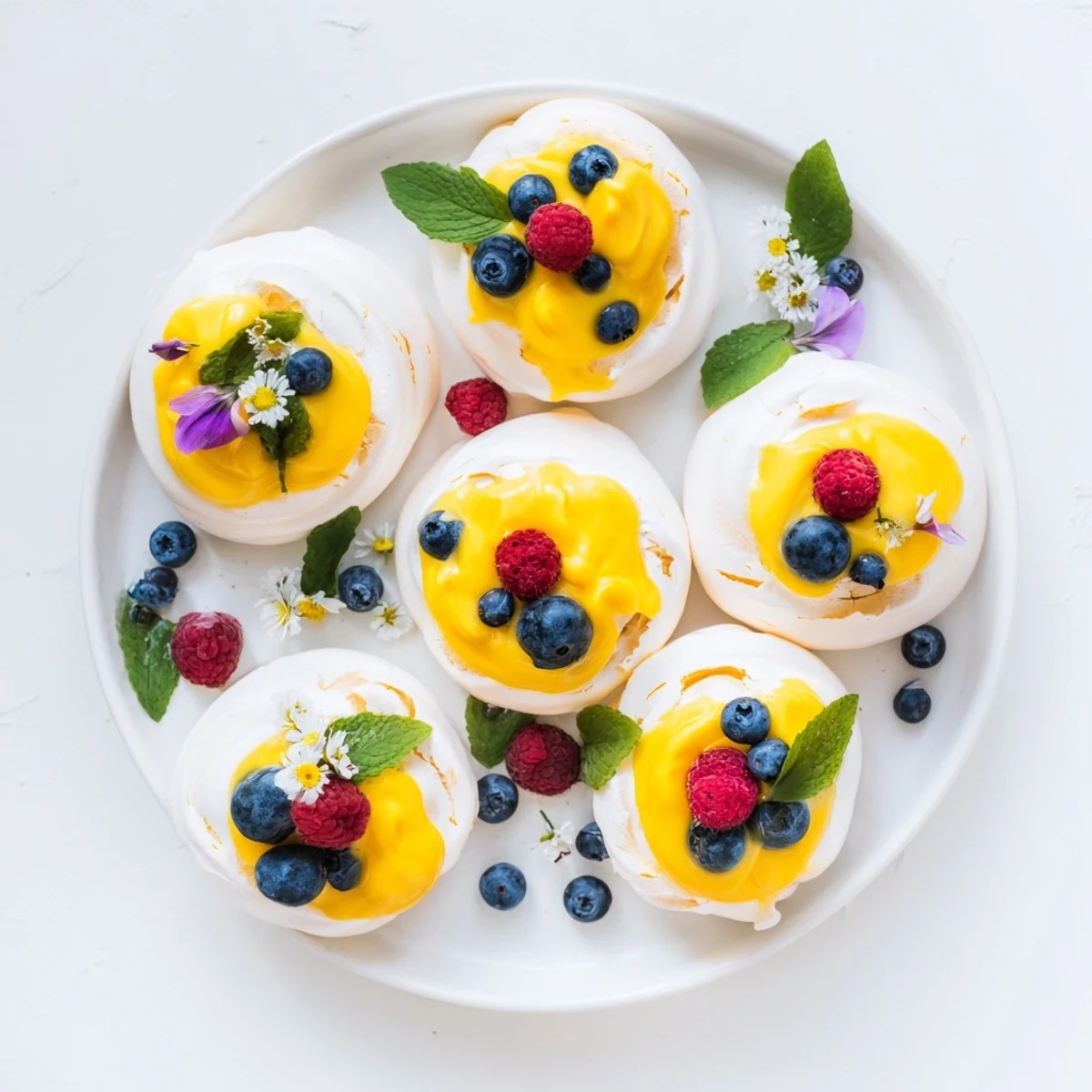
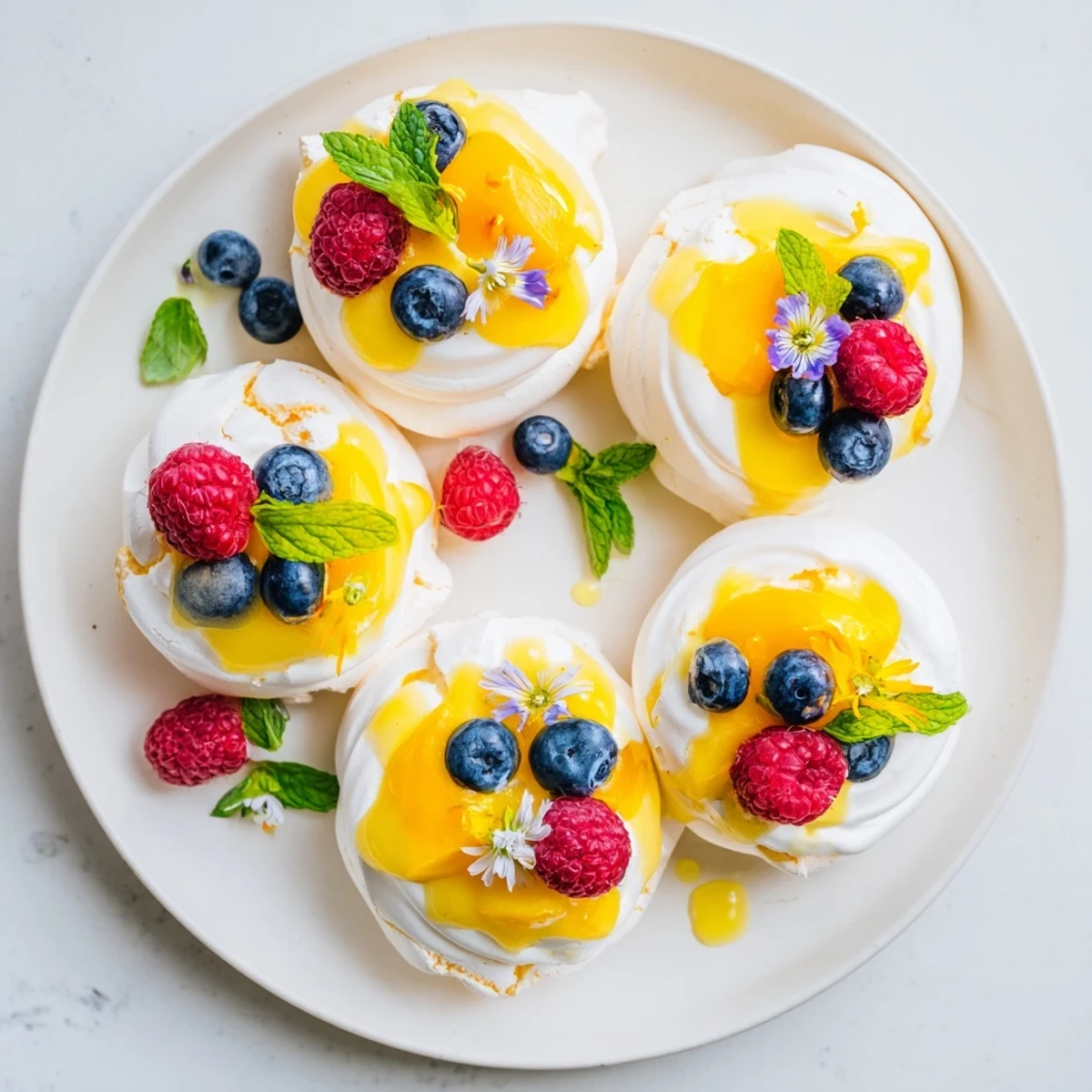
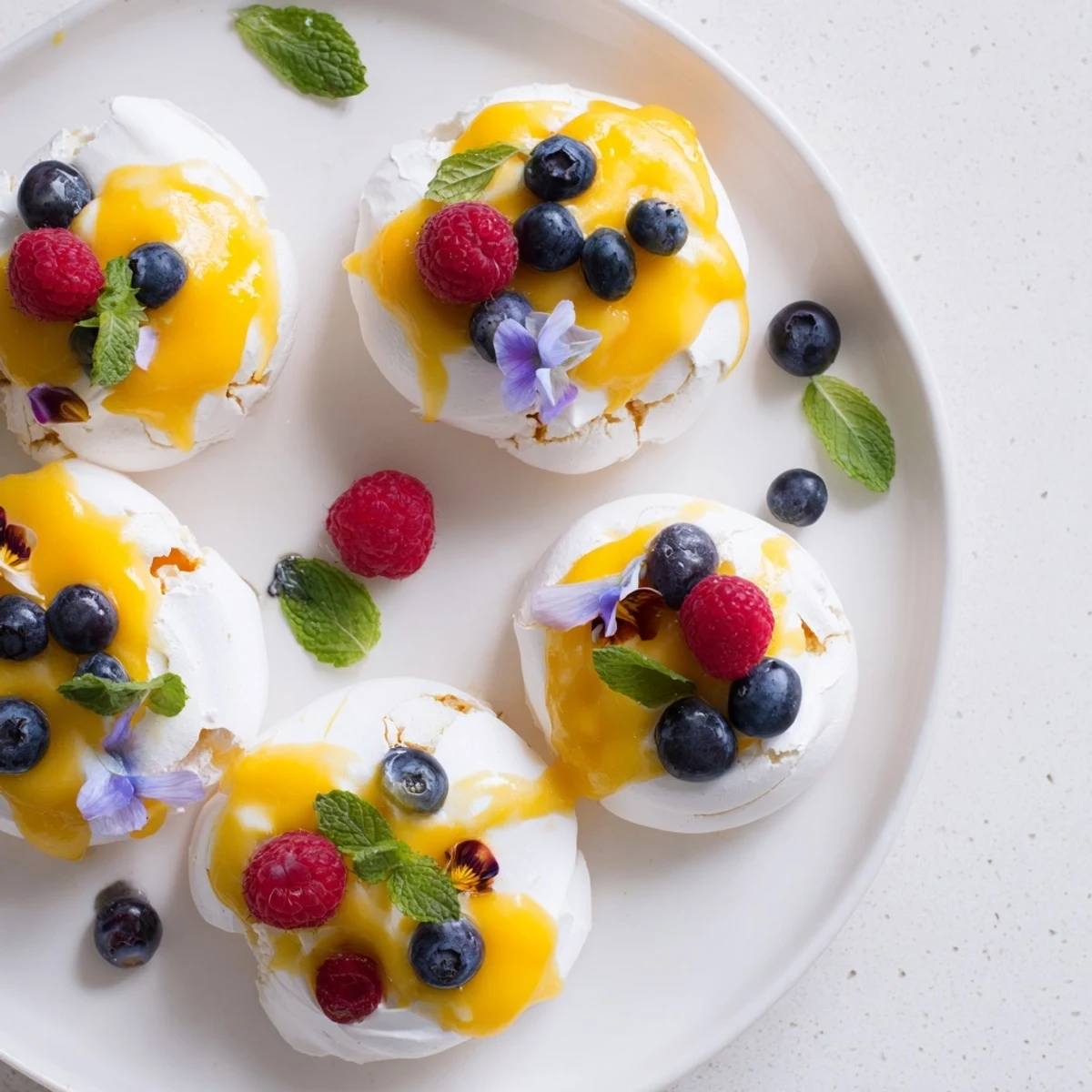
Save These delicate meringue shells offer a crisp exterior with marshmallow-soft interiors, providing the perfect canvas for a vibrant citrus curd. The bright blend of lemon and orange creates a luscious filling that balances sweetness with refreshing acidity.
Low-temperature baking ensures proper drying without browning, while the double-boiler method produces silky smooth curd. Each portion delivers contrasting textures and complementary flavors.
The first time I made meringues, I stood in my tiny apartment kitchen watching egg whites transform into glossy white clouds, completely mesmerized. I had no patience then, so I pulled them from the oven too early and ended up with marshmallow centers instead of crisp shells. Now I know better, and that oven cooling time has become my favorite part of the process. The house gets quiet, the oven light glows, and I know something magical is happening behind that glass door.
I served these at a summer dinner party once, balancing the plates on my lap as my dining table overflowed with guests and laughter. A friend who usually skips dessert went back for seconds, then thirds, declaring that the sunny citrus curd tasted like happiness on a spoon. Now whenever I smell oranges and lemons being zested together, I remember that evening and how something so simple can make a table full of people go quiet for just a moment.
Ingredients
- 4 large egg whites: Room temperature whites whip up faster and hold their structure better than cold ones, so set them out about 30 minutes before you start
- 1 cup superfine sugar: This dissolves more easily into the egg whites than regular granulated sugar, giving you that signature glossy finish
- 1/2 teaspoon cream of tartar: The secret weapon that stabilizes your egg whites, especially helpful on humid days when meringues can be stubborn
- 1/2 teaspoon vanilla extract: Adds a warm, floral background note that rounds out the sharp citrus perfectly
- Pinch of salt: Just enough to enhance the vanilla and help the egg whites foam up beautifully
- 3 large egg yolks: Save these from your meringue eggs, they become the rich base for your curd
- 2/3 cup granulated sugar: Standard sugar works perfectly here since it will dissolve completely in the warm curd mixture
- 1/4 cup fresh lemon juice plus 2 tablespoons orange juice: The combination creates a complex citrus flavor that is bright but not one-note
- 1 tablespoon each lemon and orange zest: The essential oils in the zest carry the real perfume of citrus, so use a microplane if you have one
- 4 tablespoons unsalted butter: Cut this into small cubes before you start, it will whisk in more smoothly and emulsify the curd into silky perfection
Instructions
- Get your oven ready:
- Preheat to 225°F and line two baking sheets with parchment paper, tracing 8 circles as guides if you want uniform meringues
- Whip the egg whites:
- In a completely clean and dry bowl, beat the whites and salt until foamy, then add cream of tartar and continue whipping until soft peaks form
- Add the sugar gradually:
- With the mixer running, sprinkle in the superfine sugar one tablespoon at a time, waiting about 15 seconds between each addition until fully incorporated
- Reach glossy peaks:
- Continue whipping on high until the whites stand up straight when you lift the beaters and the mixture looks glossy and smooth, then fold in the vanilla
- Shape the meringues:
- Spoon or pipe the meringue into 8 mounds on your prepared sheets, using the back of a spoon to create a shallow well in the center of each for holding the curd later
- Low and slow baking:
- Bake for 1 hour 15 minutes until the meringues feel dry to the touch and lift easily from the parchment, then turn off the oven but leave them inside to cool completely
- Start the citrus curd:
- While meringues cool, whisk together egg yolks, sugar, both juices, and both zests in a heatproof bowl until the mixture is pale and slightly thickened
- Cook until thickened:
- Set the bowl over a saucepan of simmering water, stirring constantly with a heatproof spatula until the curd coats the back of a spoon, about 8 to 10 minutes
- Emulsify with butter:
- Remove from heat and immediately whisk in the butter cubes one at a time, letting each piece melt completely before adding the next
- Cool and assemble:
- Let the curd cool to room temperature, then spoon it generously into the centers of your cooled meringues and serve within an hour for the best texture
 Save
Save My daughter helped me make these last spring, standing on a chair to watch the mixer spin the egg whites into glossy peaks. We ate them outside in the garden with strawberries from the farmers market, getting curd on our chins and not even caring. Now whenever she sees egg whites in a bowl, she asks if we are making cloud cookies.
Making Meringues In Humid Weather
On rainy days, meringues can weep or develop a sticky surface even when baked perfectly. Try baking them an extra 15 minutes and let them cool longer in the oven with the door cracked open slightly to help moisture escape. If it is extremely humid, consider storing them in an airtight container with a desiccant packet or a few grains of uncooked rice to absorb excess moisture.
Perfecting Your Citrus Curd
The difference between good curd and great curd comes down to patience and temperature. Keep the water at a gentle simmer, never a rolling boil, and stir continuously so the eggs cook slowly and evenly without scrambling. When the curd suddenly thickens and your spatula leaves a clear trail, remove it immediately even if it seems too thin, as it will continue to thicken as it cools.
Serving And Storage Suggestions
Meringues are best the day they are made but can be stored in an airtight container at room temperature for up to three days. Wait to fill them with curd until just before serving, or the crisp shells will start to soften and lose that wonderful shatter when you bite in. If you need to transport them, pack the curd separately and assemble on site for the most impressive presentation.
- Add a dollop of lightly sweetened whipped cream underneath the curd for an even creamier bite
- Toasted nuts like pistachios or almonds add a lovely crunch contrast to the smooth curd
- These pair beautifully with sparkling wine or a late harvest Riesling for an elegant finish
 Save
Save There is something deeply satisfying about turning humble egg whites and sugar into something so ethereal and lovely. I hope these bring a little brightness to your table and maybe even become one of those recipes you return to again and again.
Your Questions Answered
- → Can I make meringues ahead of time?
-
Absolutely. Bake and cool completely, then store in an airtight container at room temperature for up to 3 days. Fill with curd just before serving for optimal texture.
- → What causes meringues to weep or become sticky?
-
Humidity is the main culprit. Avoid making on rainy days and ensure meringues cool completely in the oven after baking—this gradual drying prevents moisture absorption and maintains crispness.
- → Can I use bottled citrus juice instead of fresh?
-
Fresh juice delivers superior flavor and acidity. Bottled versions lack brightness and may produce curd with artificial aftertaste. Fresh lemons and oranges are worth the extra effort.
- → How do I know when curd is thick enough?
-
The curd is ready when it coats the back of a spoon and leaves a clear path when you run your finger through it. It should resemble warm custard or pudding consistency.
- → Can I substitute cream of tartar?
-
Lemon juice or white vinegar work as alternatives, using half the amount. Acid stabilizes egg whites, helping them hold volume and maintain structure during long baking.
- → Why must egg whites be at room temperature?
-
Room-temperature whites achieve greater volume and form stronger protein networks. They whip faster and hold peaks better, resulting in lighter, more stable meringues.