
 Save
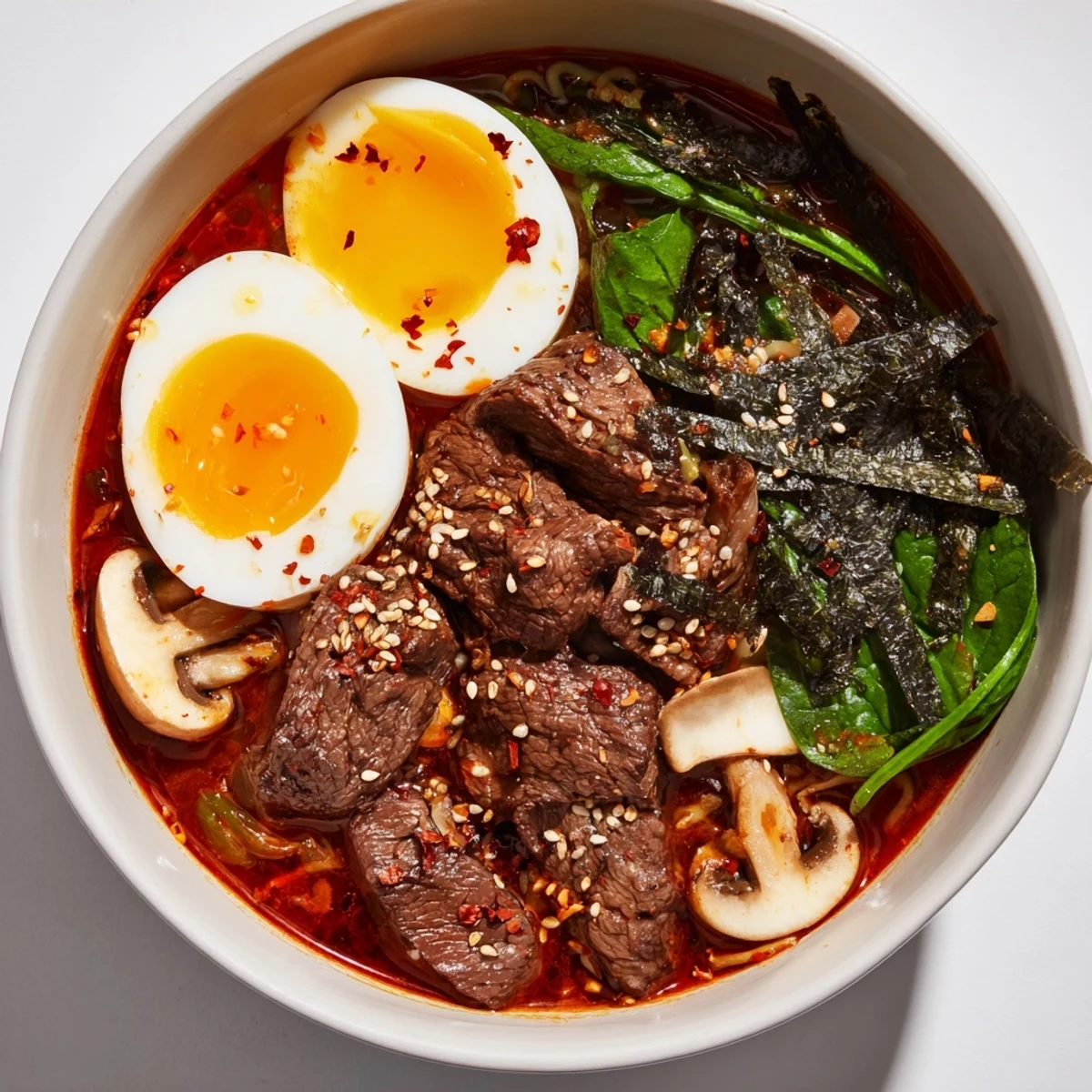
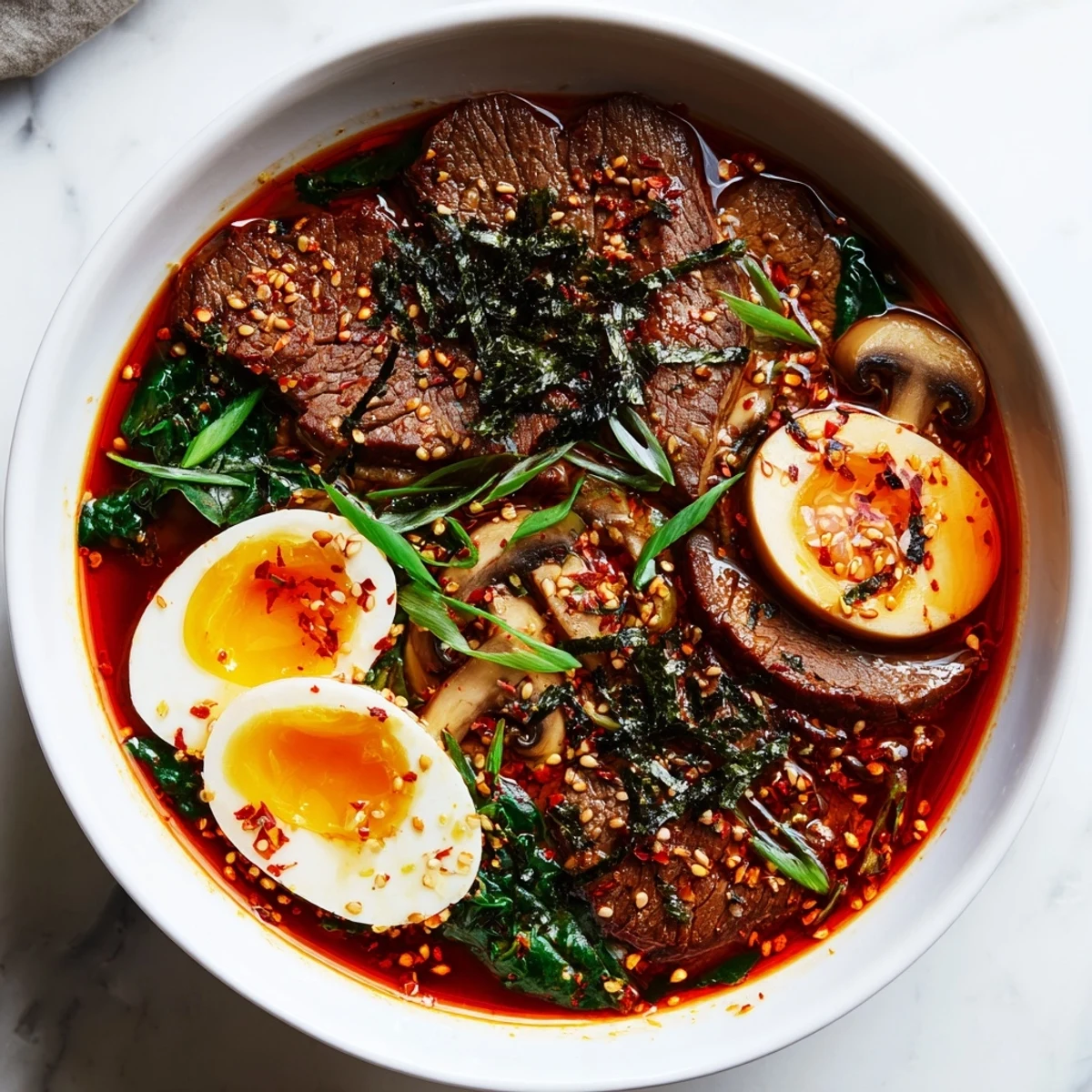
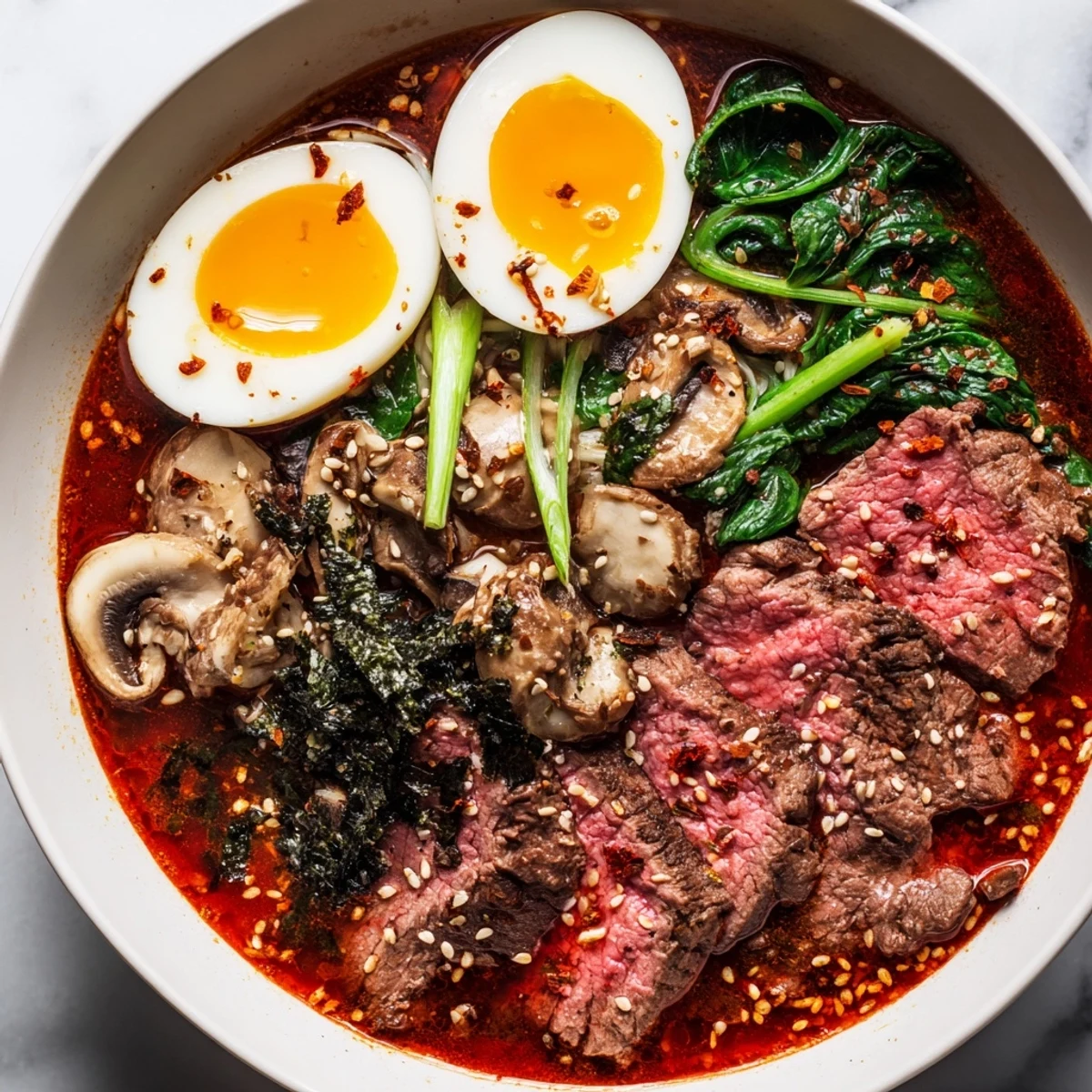
Save This dish combines tender beef slices marinated in savory seasonings with a rich, spicy broth infused with garlic, ginger, and chili paste. Fresh or dried ramen noodles are cooked to perfection and served topped with soft-boiled eggs, shiitake mushrooms, baby greens, and a sprinkle of toasted sesame seeds and nori strips. The layers of flavor and texture create a bold, satisfying meal inspired by Japanese culinary traditions that can be prepared in under an hour.
I still think about the cold March night when I first cracked a soft-boiled egg into a steaming bowl of ramen and watched the yolk bleed into the broth. The kitchen windows were fogged, the radio was playing quietly, and I realized I'd been eating instant noodles wrong my entire life. This version, with thinly sliced beef and a broth that actually has layers of flavor, became my go-to whenever I need something that feels like a hug in a bowl.
The first time I made this for friends, I panicked because I overcooked one of the eggs. But no one noticed, they were too busy slurping noodles and asking why the beef was so tender. I learned that marinating even for ten minutes makes a difference, and that people are far more forgiving than I am when there's a warm bowl in front of them.
Ingredients
- Beef sirloin or flank steak (300 g, thinly sliced): Slice it against the grain so it stays tender, and freeze it for 15 minutes first if you want paper-thin pieces.
- Soy sauce (1 tbsp for beef, 2 tbsp for broth): This is your salt and umami base, use regular soy sauce unless you need to go gluten-free.
- Sesame oil (1 tsp): Just a little adds a toasty, nutty backdrop that makes the beef taste richer.
- Cornstarch (1 tsp): It helps the marinade cling and keeps the beef silky in the hot broth.
- Chili paste (2 tbsp gochujang or sambal oelek): This is where the heat lives, start with less if you're not sure.
- Miso paste (1 tbsp): It gives the broth a savory depth that plain stock just can't match.
- Chicken or beef stock (1.5 L): Homemade is lovely, but a good boxed stock works perfectly fine on a weeknight.
- Mirin (1 tbsp, optional): A touch of sweetness balances the chili and soy, but you can skip it if you don't have it.
- Rice vinegar (1 tbsp): Brightens everything up so the broth doesn't feel heavy.
- Ramen noodles (4 portions): Fresh is best, but dried works great, just follow the package timing.
- Eggs (4 large): Six to seven minutes gets you a jammy yolk, which is the whole point.
- Shiitake mushrooms (100 g, sliced): They soak up the broth and add an earthy chew.
- Baby spinach or bok choy (100 g): Wilts in seconds and adds a fresh green contrast.
- Spring onions, sesame seeds, nori, chili flakes: These toppings aren't just pretty, they add texture and little bursts of flavor in every bite.
Instructions
- Marinate the Beef:
- Toss the sliced beef with soy sauce, sesame oil, cornstarch, and black pepper in a bowl. Let it sit for at least 10 minutes while you prep everything else.
- Prepare the Eggs:
- Bring a pot of water to a gentle boil, lower in the eggs, and set a timer for 6 to 7 minutes. Transfer them straight to ice water, then peel and halve them when you're ready to serve.
- Make the Broth:
- Heat vegetable oil in a large pot over medium heat, then sauté the onion, garlic, and ginger until your kitchen smells amazing. Stir in the chili paste and miso paste, let it cook for a minute, then pour in the stock, soy sauce, mirin, rice vinegar, and sugar.
- Simmer:
- Bring the broth to a gentle simmer and let it cook for 10 minutes so the flavors meld together.
- Cook the Beef and Vegetables:
- Add the marinated beef and sliced mushrooms to the simmering broth, cook for 5 to 7 minutes until the beef is just done. Toss in the spinach or bok choy and let it wilt for a minute or two.
- Cook the Noodles:
- While the beef is cooking, boil the ramen noodles according to the package instructions, then drain and rinse them briefly under hot water.
- Assemble:
- Divide the noodles between bowls, ladle over the hot broth with beef, mushrooms, and greens, then top each bowl with halved eggs, spring onions, sesame seeds, nori strips, and chili flakes. Serve immediately while everything is piping hot.
 Save
Save One rainy Saturday, I made a double batch of this and froze half the broth in jars. A week later, when I didn't feel like cooking, I thawed it, boiled fresh noodles, and had dinner in fifteen minutes. It felt like a gift from my past self, and I've done it ever since.
Adjusting the Heat
Start with one tablespoon of chili paste and taste the broth before adding more. You can always stir in extra at the table with chili oil or flakes, but you can't take it back once it's in. I learned this after making a batch so spicy my friend had to drink three glasses of milk.
Swapping the Protein
I've made this with chicken thighs, firm tofu, and even leftover roast pork. The broth stays the same, just adjust the cooking time so nothing gets rubbery or dry. Tofu only needs a minute or two to heat through, and it soaks up the spice beautifully.
Storing and Reheating
Store the broth, beef, and vegetables separately from the noodles and eggs, or the noodles will turn mushy. The broth keeps in the fridge for three days or in the freezer for up to two months. When you reheat, cook fresh noodles and boil new eggs, it only takes a few extra minutes and makes all the difference.
- Let the broth cool completely before transferring it to jars or containers.
- Label everything with the date so you don't forget what's in the back of the freezer.
- Reheat the broth gently on the stove, don't microwave it or the flavors won't wake up the same way.
 Save
Save This is the kind of meal that makes you slow down and pay attention, even on a busy night. I hope it warms you up the way it's warmed me up, one bowl at a time.
Your Questions Answered
- → How do I achieve a perfect soft-boiled egg?
-
Bring water to a gentle boil, then lower in eggs and cook for 6–7 minutes. Transfer to ice water to stop cooking, then peel carefully for tender yolks.
- → Can I use a different protein instead of beef?
-
Yes, chicken or tofu can be substituted to suit dietary preferences while maintaining a rich flavor in the broth.
- → What gives the broth its spicy kick?
-
The broth’s heat comes from chili paste such as gochujang or sambal oelek, balanced with miso and aromatic garlic and ginger.
- → How should I cook ramen noodles for best results?
-
Cook noodles according to package instructions. After draining, rinse briefly under hot water to remove excess starch.
- → Are there vegetarian-friendly adjustments for this dish?
-
Use vegetable stock instead of meat-based broth and replace beef with firm tofu or mushrooms for a vegetarian-friendly alternative.
- → What toppings enhance the flavor and texture?
-
Soft-boiled eggs, shiitake mushrooms, baby greens, spring onions, toasted sesame seeds, nori strips, and chili flakes add depth and a variety of textures.